There’s a point in every precision-driven workflow where frustration quietly builds. The design is flawless. The material is right. The process, on paper, should work perfectly. And yet—edges aren’t clean enough, heat marks appear where they shouldn’t, or repeatability slips just enough to cause rework.
This is usually the moment when engineers stop asking “How do we tweak the process?” and start asking “Are we using the right laser at all?”
For many applications, the answer turns out to be the Short-pulse DPSS laser, especially when it’s engineered with the depth and discipline that Solid Laser brings to the table.
The Hidden Problem with “Good Enough” Lasers
Traditional laser systems often force compromise. Longer pulse durations introduce heat. Heat introduces stress. Stress leads to microcracks, discoloration, or subtle deformation that only shows up later—sometimes after the product has already shipped.
You can slow the process down. You can add cooling steps. You can accept higher scrap rates. But none of those actually solve the root issue.
A short-pulse DPSS laser approaches the problem differently. Instead of overpowering the material, it works with its physical limits.
What Makes a Short-Pulse DPSS Laser So Effective?
DPSS (Diode Pumped Solid State) lasers are already known for stability and beam quality. When combined with short pulse durations, the results change dramatically.
Short pulses deliver energy in tightly controlled bursts, allowing material removal to happen faster than heat can spread. In real-world terms, that means:
Minimal thermal damage
Sharper edges and cleaner features
Greater consistency across long production runs
Solid Laser has refined this balance—pulse duration, wavelength stability, and power control—into systems that behave predictably even under demanding conditions.
A Practical Perspective: When Precision Finally Feels Effortless
One Solid Laser user described the switch as “less dramatic than expected—and that was the best part.”
No sudden learning curve. No fragile setup. Just immediate improvements in cut quality and process confidence. Delicate components that once required constant monitoring suddenly ran smoothly. Operators stopped second-guessing settings. Quality checks became routine instead of stressful.
That’s the quiet value of a well-designed short-pulse DPSS laser. It doesn’t demand attention. It earns trust.
Where Solid Laser’s Short-Pulse DPSS Laser Shines
Micromachining and Fine Structuring
When features are measured in microns, even slight thermal distortion matters. Solid Laser systems enable crisp, repeatable results without sacrificing speed.
Electronics and Semiconductor Processing
Sensitive substrates and layered materials benefit from low-heat interaction. The short pulse approach preserves material integrity while maintaining throughput.
Medical and Scientific Applications
From precision marking to micro-drilling, consistency and cleanliness are non-negotiable. Solid Laser’s engineering philosophy aligns closely with these requirements.
In each case, the laser becomes a tool you rely on—not one you constantly adjust.
Stability Isn’t a Feature—It’s a Requirement
Many laser specifications look impressive on paper. But stability over time is where systems prove themselves.
Solid Laser designs its short-pulse DPSS laser platforms with long-term performance in mind. Thermal management, optical alignment, and power consistency aren’t treated as afterthoughts. They’re foundational.
That’s especially important for labs and production environments where repeatability isn’t just preferred—it’s mandatory.
The Less Obvious Advantage: Process Simplification
One of the most overlooked benefits of switching to a short-pulse DPSS laser is what disappears from your workflow.
Fewer post-processing steps
Less material waste
Reduced need for parameter babysitting
Over time, these small efficiencies add up. Teams spend less time fixing problems and more time refining outcomes. That’s where Solid Laser’s approach feels grounded in real-world experience rather than theoretical performance.
Why Solid Laser’s Approach Feels Different
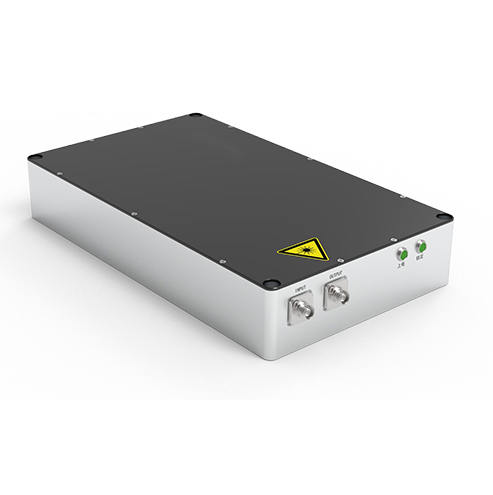
Solid Laser doesn’t position its systems as experimental or niche. Their short-pulse DPSS laser solutions are built for people who need dependable results day after day.
The design philosophy is clear on their platform: prioritize beam quality, pulse control, and system robustness over flashy claims. The result is equipment that integrates naturally into existing workflows instead of forcing everything else to adapt.
That matters more than most spec sheets admit.
Is This Technology Overkill?
It’s a fair question. Not every application needs ultrafine control. But many teams don’t realize how much quality they’re trading away until they experience true short-pulse performance.
If your work involves:
Tight tolerances
Heat-sensitive materials
High expectations for consistency
Then a Short-pulse DPSS laser from Solid Laser isn’t overkill.
Final Reflection
Precision isn’t just about sharper cuts or smaller features. It’s about confidence—knowing the tool will behave the same way today, tomorrow, and six months from now.
A short-pulse DPSS laser from Solid Laser delivers that confidence quietly, through consistency rather than spectacle. And once that becomes part of your process, it’s hard to imagine working any other way.