If you’ve ever tried to extract clean Raman spectra from a challenging sample, you know the frustration. You align the optics carefully. You calibrate. You optimize integration time. And still—fluorescence overwhelms your signal, or the Raman peaks you need are faint and buried in noise.
For researchers and engineers working in material science, semiconductor inspection, pharmaceuticals, or biochemical analysis, this isn’t a minor inconvenience. It’s a bottleneck.
That’s where an Ultraviolet Raman laser source becomes more than just another component in your setup—it becomes the difference between usable data and guesswork.
 Solid Laser has built its reputation around precision photonics, and their approach to ultraviolet Raman technology reflects a deep understanding of what modern spectroscopy labs actually need: stability, spectral purity, and repeatable performance under real-world conditions.
Let’s unpack why that matters.
Solid Laser has built its reputation around precision photonics, and their approach to ultraviolet Raman technology reflects a deep understanding of what modern spectroscopy labs actually need: stability, spectral purity, and repeatable performance under real-world conditions.
Let’s unpack why that matters.
Solid Laser has built its reputation around precision photonics, and their approach to ultraviolet Raman technology reflects a deep understanding of what modern spectroscopy labs actually need: stability, spectral purity, and repeatable performance under real-world conditions.
Let’s unpack why that matters.
Why UV Raman Instead of Visible?
Most Raman systems traditionally operate in the visible range—532 nm or 785 nm are common choices. They work well for many materials. But as soon as you encounter highly fluorescent samples—organic compounds, biological tissues, polymers—the limitations become obvious. Fluorescence can completely mask Raman scattering. An Ultraviolet Raman laser source operates at shorter wavelengths, often below 400 nm. That shift dramatically reduces fluorescence interference and enhances surface sensitivity. In some cases, UV excitation also increases Raman cross-sections for certain molecular bonds, improving detection sensitivity. In practical terms? Cleaner spectra. Sharper peaks. Less post-processing. I’ve seen researchers spend weeks trying to “fix” noisy Raman data with software. Switching to UV excitation often solves the problem at the source—literally.The Challenge with UV Lasers
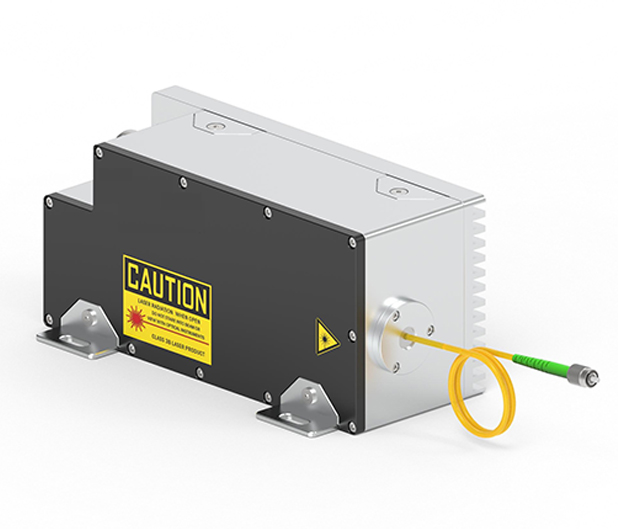
UV systems aren’t forgiving. Shorter wavelengths demand tighter tolerances in beam quality, optical coatings, and thermal management. Even minor instability can introduce spectral drift or intensity fluctuations, undermining reproducibility. This is where Solid Laser differentiates itself. Their Ultraviolet Raman laser source is engineered with high beam quality (near-diffraction-limited), narrow linewidth, and excellent power stability. Those specifications aren’t marketing buzzwords—they’re operational necessities. When you’re characterizing thin films, detecting trace contaminants, or analyzing crystalline stress in semiconductors, instability isn’t just inconvenient—it invalidates results. Real-World Applications Where UV Makes a Difference1. Semiconductor and Microelectronics Analysis
In wafer inspection or defect characterization, surface sensitivity is critical. UV excitation minimizes penetration depth and enhances surface-specific information. That’s invaluable when analyzing thin layers or contamination.2. Pharmaceutical Quality Control
Certain drug compounds fluoresce strongly under visible excitation. Using an Ultraviolet Raman laser source suppresses that fluorescence, allowing clearer identification of polymorphs and molecular structures.3. Carbon Materials and Graphene Research
UV Raman improves detection of subtle structural changes and defect density in carbon-based materials. For advanced material labs, this level of precision is non-negotiable.4. Biological and Biochemical Studies
Proteins, nucleic acids, and aromatic amino acids exhibit strong UV resonance enhancement. UV Raman can selectively amplify signals from these molecular groups. These aren’t theoretical advantages—they translate directly into higher data confidence.What Sets Solid Laser Apart
Many UV laser providers focus solely on wavelength output. Solid Laser goes further. Their Ultraviolet Raman laser source systems emphasize:- Narrow spectral linewidth for high-resolution measurements
- Low noise and minimal intensity fluctuation
- Robust thermal control for long-term stability
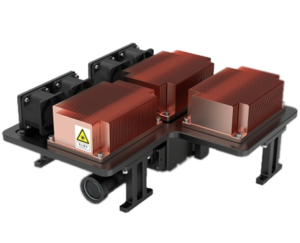
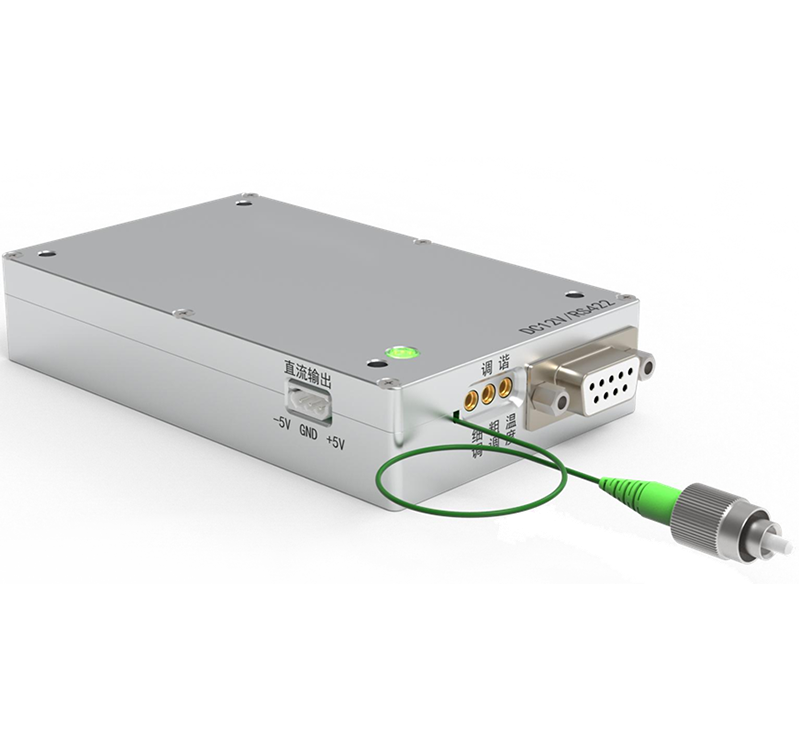
- Compact, integration-friendly designs
- Reliable long operational lifetimes
Stability: The Unsung Hero of Raman Spectroscopy
Let’s talk about something that doesn’t get enough attention—power stability. A 1–2% fluctuation may sound trivial. But when comparing spectra across time, or performing quantitative Raman analysis, those variations compound. With a stable Ultraviolet Raman laser source, baseline drift is minimized. Peak intensity comparisons become meaningful. Long-term experiments remain consistent. That stability transforms Raman spectroscopy from a qualitative tool into a quantitative one.Integration and System Compatibility
Another overlooked factor is integration. Not every lab builds systems from scratch; many rely on modular spectrometers and fiber-coupled inputs. Solid Laser’s Ultraviolet Raman laser source solutions are designed with flexible coupling options, enabling seamless integration into OEM platforms and custom setups. That reduces alignment complexity and accelerates deployment. For industrial users, this matters even more. Production environments demand repeatable installation and minimal recalibration.Practical Considerations Before Choosing UV Raman
Before switching to UV, consider:- Optical compatibility: UV-grade optics and coatings are essential.
- Sample sensitivity: Some materials can degrade under UV exposure.
- Safety protocols: UV wavelengths require stricter protective measures.
A Perspective from the Lab Floor
I once worked alongside a team analyzing polymer contamination in microfabrication. Visible Raman consistently produced fluorescence-heavy spectra. Data processing became a battle. When the team upgraded to a UV system, the difference was immediate. The noise floor dropped. The contamination peaks became identifiable without aggressive filtering.Final Thoughts
Raman spectroscopy is only as good as its excitation source. If fluorescence is overwhelming your data or surface sensitivity is limiting your analysis, upgrading to an Ultraviolet Raman laser source may not just improve your workflow—it may redefine it.
Solid Laser approaches UV Raman technology with engineering rigor and practical insight. For laboratories and OEM integrators who value precision over compromise, that distinction matters.