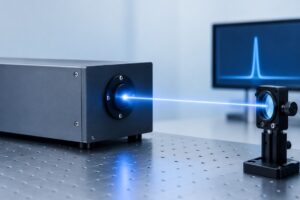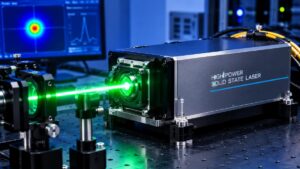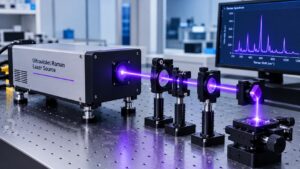
Picosecond Fiber Lasers have emerged as a breakthrough in precision laser technology, offering significant advantages over traditional nanosecond and continuous-wave laser systems. As industries demand higher accuracy, cleaner processing, and minimal thermal damage, these advanced systems are rapidly becoming the preferred solution.
In this blog, we explore how Picosecond Fiber Lasers outperform conventional lasers and why they are increasingly adopted across industries.
Introduction to Picosecond Fiber Lasers
Picosecond Fiber Lasers operate with pulse durations in the range of trillionths of a second (10⁻¹² s). This ultra-short pulse allows energy to interact with materials faster than heat can spread, enabling what is known as cold ablation.
Compared to traditional laser systems, which rely on longer pulse durations, Picosecond Fiber Lasers deliver significantly higher precision with minimal thermal side effects. They are also part of the broader category of Ultrafast fiber laser technologies, which include even shorter pulse systems like the Femtosecond fiber laser.
Another key advantage of Picosecond Fiber Lasers is their growing role in advanced industrial automation and high-precision manufacturing workflows. Their ability to deliver consistent, repeatable results makes them ideal for integration into modern production lines where accuracy, speed, and minimal material waste are critical for maintaining competitive efficiency.
Key Advantages of Picosecond Fiber Lasers
1. Minimal Heat-Affected Zone (HAZ)
The most important benefit is their ability to reduce thermal damage. Since the pulse duration is shorter than the heat diffusion time, surrounding material remains unaffected.
Traditional lasers often create burns, microcracks, or deformation — issues nearly eliminated with picosecond technology.
2. Exceptional Precision and Micromachining Capability
Picosecond Fiber Lasers enable extremely fine material processing at micro and nano scales. This makes them ideal for:
- Electronics manufacturing
- Medical device fabrication
- Semiconductor processing
Their high peak power and short pulses ensure clean edges and superior accuracy.
3. Superior Material Versatility
Unlike traditional systems, Picosecond Fiber Lasers can process a wide range of materials, including:
- Metals
- Glass
- Polymers
- Ceramics
They are particularly effective on brittle or transparent materials where conventional lasers struggle.
4. Higher Efficiency and Speed
Because energy is delivered in ultra-short bursts, material removal is faster and more efficient. This results in:
- Reduced processing time
- Increased production throughput
- Lower operational costs
5. Reduced Maintenance and High Reliability
Fiber-based systems are known for:
- Compact design
- Alignment-free operation
- Long service life
Compared to traditional laser setups, they require less maintenance and offer greater operational stability.
6. Cost-Effective in the Long Run
Although initial investment may be higher, these Fiber Lasers provide:
- Lower energy consumption
- Minimal waste
- Reduced post-processing
This leads to a better total cost of ownership over time.
Comparison with Femtosecond and Traditional Lasers
While Femtosecond fiber laser systems offer even shorter pulses (10⁻¹⁵ s) and extreme precision, they are often more complex and expensive.
Picosecond Fiber Lasers strike a balance between:
- Cost efficiency
- High precision
- Industrial scalability
Traditional nanosecond lasers, on the other hand, produce more thermal damage and lower-quality results due to longer pulse durations.
Applications of Picosecond Fiber Lasers
Industries leveraging Picosecond Fiber Lasers include:
- Microelectronics and PCB manufacturing
- Medical and biomedical devices
- Aerospace components
- Precision marking and engraving
Their ability to deliver clean, repeatable results makes them indispensable in high-tech manufacturing.
Conclusion
In summary, Picosecond Fiber Lasers offer a powerful combination of precision, efficiency, and reliability that traditional laser systems simply cannot match. As part of the evolving Ultrafast fiber laser landscape, they provide an ideal balance between performance and cost — bridging the gap between conventional lasers and advanced Femtosecond fiber laser systems.
For industries seeking cutting-edge laser solutions, companies like Solid Laser are leading the way with advanced ultrafast technologies designed for modern manufacturing needs.
Additionally, they continue to gain traction due to their adaptability across diverse applications. From micro-machining to precision marking, they make a future-ready solution for industries focused on innovation and sustainable production.
FAQs About: Picosecond Fiber Lasers