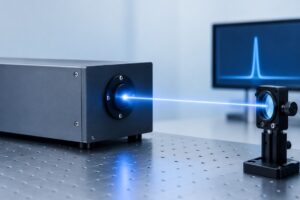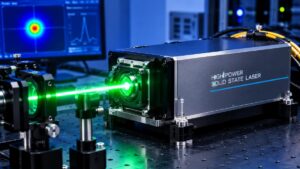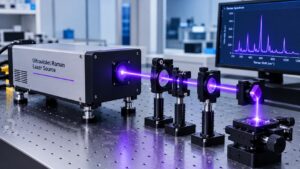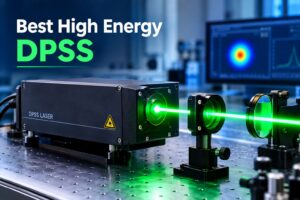
Laser technology has become an essential part of modern manufacturing, scientific research, medical treatment, and industrial automation. Among the most advanced laser solutions available today are DPSS UV Lasers, known for their exceptional precision, compact design, and reliable performance. These lasers are widely used in industries that require high accuracy, stable beam quality, and efficient energy conversion.
DPSS, or Diode Pumped Solid-State, lasers use semiconductor diodes to pump a solid-state gain medium, producing highly stable laser output with excellent efficiency. Different DPSS laser configurations are designed to meet specific operational requirements, including ultraviolet applications, high-energy processing, and frequency conversion technologies.
Understanding the different types of DPSS lasers can help businesses and researchers choose the right system for their unique applications.
What is a DPSS Laser And Who Are Its Potential Buyers?
A DPSS laser is a laser system that uses laser diodes as the pumping source instead of traditional flash lamps. This design improves efficiency, reduces maintenance requirements, and delivers better thermal stability and beam quality.
DPSS lasers are available in various wavelengths, power outputs, and pulse configurations, making them suitable for a broad range of industries. Their compact structure and precision capabilities have made them one of the most preferred laser technologies worldwide.
Potential buyers of DPSS laser systems include:
- Semiconductor manufacturers
- Scientific research laboratories
- Medical device companies
- Aerospace and defense organizations
- Electronics manufacturing facilities
- Optical instrumentation developers
These industries rely on DPSS technology because of its ability to deliver highly controlled laser energy for precision-based operations.
The growing demand for miniaturized electronic components and precision manufacturing continues to increase the adoption of DPSS laser systems globally.
High Energy DPSS Laser: When Do You Need Joule-Class Power?
Some industrial and scientific applications require extremely powerful laser pulses capable of delivering high peak energy. This is where a High Energy DPSS laser becomes essential.
High-energy DPSS lasers are designed to produce intense pulses with superior beam stability and precise energy control. Joule-class power output is often necessary for applications involving deep material processing, laser-induced plasma generation, and advanced scientific experimentation.
Industries and applications that commonly require high-energy DPSS lasers include:
- Aerospace and Defense: Defense systems use high-energy lasers for target designation, range finding, lidar systems, and directed-energy research. Aerospace companies also use them for material testing and precision component manufacturing.
- Scientific Research: Research laboratories use high-energy DPSS systems in nuclear fusion studies, plasma physics, nonlinear optics, and high-speed imaging applications. Their stable pulse energy helps researchers achieve highly repeatable experimental results.
- Industrial Material Processing: High-energy laser pulses are ideal for cutting, drilling, welding, and surface modification of hard materials. Industries working with ceramics, metals, and composite materials often require joule-class laser power for efficient processing.
- Medical and Biomedical Applications: Certain medical procedures rely on high-energy laser pulses for precise tissue interaction and advanced imaging technologies. The controlled pulse characteristics improve treatment precision while minimizing damage to surrounding tissue.
One major advantage of high-energy DPSS lasers is their ability to maintain beam consistency even at elevated power levels. Efficient thermal management systems and advanced optical designs improve operational reliability during continuous use.
Choosing a high-energy laser system depends on factors such as pulse duration, wavelength, repetition rate, cooling mechanisms, and beam quality requirements.
What are Frequency-Doubled DPSS Lasers?
Frequency-doubled DPSS Lasers are specialized laser systems that convert the original laser wavelength into a shorter wavelength using nonlinear optical crystals. This process is commonly known as second harmonic generation.
Frequency-doubled lasers are widely used because shorter wavelengths can focus into smaller spots, improving accuracy in micro-processing and analytical applications.
Common applications of Frequency-doubled DPSS Lasers include:
- Laser marking and engraving
- Biomedical imaging
- Holography
- Semiconductor inspection
- Precision alignment systems
- Fluorescence analysis
- Scientific instrumentation
One of the key benefits of frequency-doubled laser technology is improved interaction with sensitive materials. Certain materials absorb shorter wavelengths more effectively, allowing cleaner processing with reduced thermal damage.
These laser systems are also preferred in applications requiring visible beam alignment. Green laser beams generated through frequency doubling are easier to detect visually compared to infrared beams, improving operational convenience.
Modern frequency-doubled DPSS systems are designed for high conversion efficiency and stable output performance. Advanced crystal alignment and thermal stabilization technologies ensure long-term reliability and consistent beam quality.
Why DPSS UV Lasers Are Growing in Demand
The demand for UV laser technology continues to rise across industries requiring ultra-fine precision. DPSS UV Lasers operate at shorter wavelengths that allow extremely small focal spot sizes and minimal heat-affected zones.
These characteristics make UV lasers ideal for delicate material processing applications such as:
- Glass cutting
- PCB micro-drilling
- Semiconductor fabrication
- Solar cell manufacturing
- Medical device processing
- Fine marking on plastics and sensitive materials
UV wavelengths are absorbed more efficiently by many non-metallic materials, resulting in cleaner processing with minimal surface damage.
Manufacturers seeking high-precision and low-defect production processes increasingly rely on UV laser systems to improve quality and operational efficiency.
For advanced laser solutions and industrial-grade systems, explore the latest offerings from Solid Laser.
Conclusion
Choosing the right DPSS laser depends on the specific requirements of your application, including wavelength, pulse energy, precision level, and operational environment. From compact laboratory systems to industrial high-energy solutions, DPSS technology offers exceptional flexibility and performance.
As industries continue to prioritize precision manufacturing, scientific innovation, and efficient processing, DPSS UV Lasers remain one of the most reliable and advanced laser technologies available today. Their ability to deliver stable output, excellent beam quality, and highly controlled energy makes them suitable for a wide range of modern industrial and scientific applications.
FAQs About: DPSS Laser Types