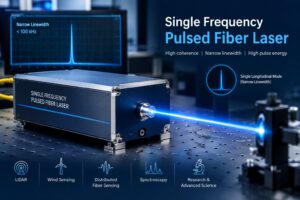
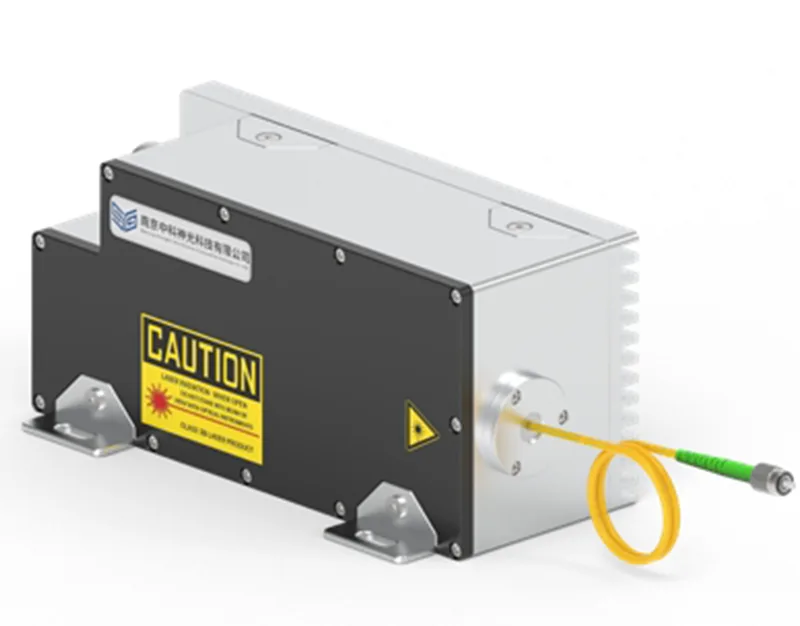
Modern photonics applications demand exceptional frequency accuracy, phase stability, and long-term reliability. The 3.5ghz Frequency-Shifted Laser is engineered to deliver an accurate frequency offset while maintaining superior beam quality and coherence. Even a slight frequency instability in the higher level of laboratories and industrial environments can affect the performance and accuracy of the measurement.
Today, due to constant advancements in research and optical devices, the necessity to possess constant frequency-controlled systems becomes essential. Better signal isolation, better interference control, and compatibility with microwave photonics platforms are made possible using a high-performance laser. Below, we explore its working principles, features, and applications.
What Is a 3.5GHz Frequency-Shifted Laser?
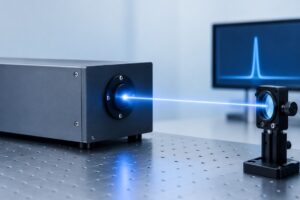
A frequency-shifted laser system is a modified original laser output that uses a frequency offset to provide 3.5 GHz to it. It is typically done where acoustic or electro-optic modulation is used, but phase strength and coherence are maintained.
- Introduces a precise 3.5 GHz frequency offset.
- Maintains narrow linewidth performance.
- Supports heterodyne detection systems.
- Reduces frequency overlap in multi-laser setups.
- Improves signal discrimination accuracy.
Core Architecture of the Laser System
A precision laser system depends on integrated components to perform its functions. Many advanced configurations are constructed on a high energy solid state laser platform to provide stability and high reliability.
- Stable single-frequency laser source.
- Frequency modulation unit (AOM or EOM).
- High-speed RF driver electronics.
- Active thermal supply stabilization module.
- Live monitoring and feedback control.
Importance of Frequency Stability in Precision Applications
Frequency stability is essential in high-accuracy applications like spectroscopy, metrology, etc.
and quantum research, where even a small variation in frequency can have effects on the measurement. A stable laser output provides reliable data collection, consistent experimental results, and reduced signal distortion. With an iodine-stabilized laser, reference systems are more accurate in the long-term, as they predict the atomic transitions used to stabilize the frequencies of the laser and reduce environmental effects and drift.
- Reduced phase noise.
- Minimal long-term drift.
- Improved coherence length.
- Consistent measurement repeatability.
- Enhanced calibration precision.
Key Performance Features Of 3.5GHz Frequency-Shifted Laser
It is designed with high stability and operational dependability to work in harsh environments. Performance optimization ensures consistent output, precise frequency control, and reduced sensitivity to environmental fluctuations.
Ultra-Narrow Linewidth
A very narrow linewidth causes the laser to emit light at a very narrow frequency range. This enhances spectral resolution and highly precise measurements of spectroscopy and interferometry.
TEM00 Beam Quality
TEM00 beam quality is a basic Gaussian beam profile and has a uniform intensity distribution. This provides enhanced focusing, reduced distortion of the beam, and enhanced precision optical systems.
High Output Power Stability
Constant output power means it is the same during experiments that take a long time to run or under industry conditions. It reduces signal fluctuations and maintains reliable results in measurement-sensitive applications.
Low Thermal Variation
High-technology leads to thermal management to reduce frequency errors due to changes in temperature. This consistency is essential to keep the accuracy in the environment where one small thermal change may influence the results.
Extended Operational Lifespan
High-quality components and robust system design ensure long-term durability. This reduces maintenance requirements and provides reliable performance over extended periods of continuous operation.
Applications in Scientific and Industrial Research
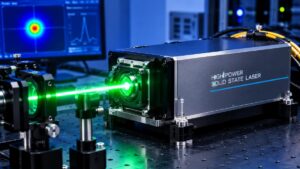
Laser systems of high precision have extensive applications in advanced research environments. They provide enhanced intensity and better experimental accuracy when used in combination with a High Power Solid State Laser.
- Optical heterodyne detection.
- Atomic and molecular spectroscopy.
- Quantum optics experiments.
- Interferometric measurements.
- Optical communication testing.
Integration with Solid State Laser Platforms
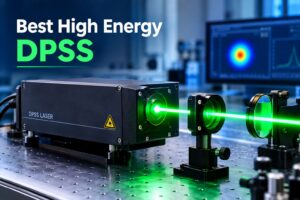
Several laboratories combine the system with a High Energy Solid State Laser to obtain high pulse energy and beam consistency. This combination facilitates versatility in the field of science and industry.
- Optical heterodyne detection.
- Atomic and molecular spectroscopy.
- Quantum optics experiments.
- Interferometric measurements.
- Testing of optical communication.
Role of Iodine Stabilization in High-Precision Systems
An iodine-stabilised laser is a frequency reference standard in extremely precise applications. This approach leads to a high degree of stability on a long-term scale and decreases unstable environmental factors.
- Atomic-level frequency referencing.
- Enhanced long-term consistency.
- Less environmental interference.
- Improved repeatability of measurement.
- Perfect for metrology applications.
Advantages Over Conventional Laser Systems
It has better frequency discrimination and modulation control than standard continuous-wave lasers. It can be used with a high power solid state laser to provide higher performance with high-reliability optical systems.
- Improved frequency division.
- Less cross-talk in multi-laser systems.
- Enhanced non-interference.
- Greater RF compatibility.
- Greater system scalability.
Thermal and Noise Management Mechanisms
Environmental stability is an essential factor in keeping frequency accuracy. Enhanced engineering guarantees reduced noise and reliability in working conditions over different environments.
- Multizonal regulation of temperature.
- Low-noise RF drivers
- Rigid cavity construction.
- Feedback stabilization loops.
- Shielded optical pathways.
Conclusion
The 3.5GHz frequency-shifted laser represents a major advancement in precision photonics, delivering accurate frequency control, enhanced stability, and reliable performance. Combined with devices like a High Energy Solid State Laser or some stabilization, it provides the precision of high quality in scientific and industrial uses.
Companies such as Solid Laser also make high-performance solid-state laser systems for research, aerospace, and industrial use. They are stable, precise, and advanced in engineering, which helps with the next-generation optical systems in spectroscopy, quantum research, and communication testing.