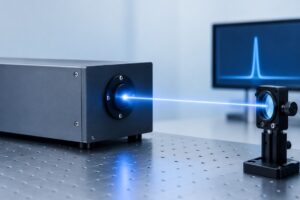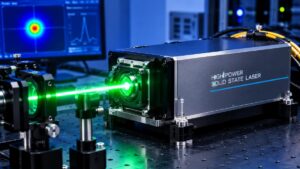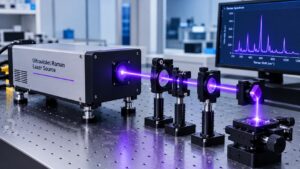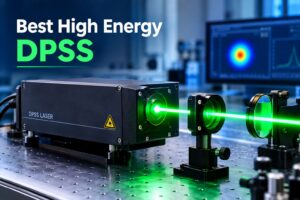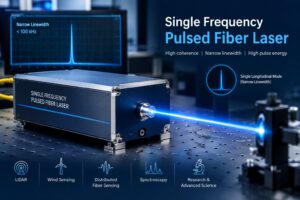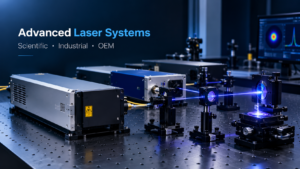
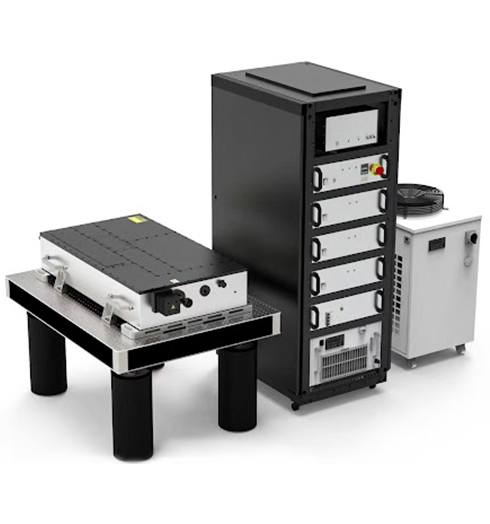
In modern photonics and precision engineering, DPSS UV Lasers have become a cornerstone technology for applications requiring accuracy, stability, and high output energy. These lasers combine the efficiency of diode pumping with the precision of solid-state gain media, delivering exceptional performance in demanding industrial and scientific environments. From micromachining to semiconductor processing, their role continues to expand due to their reliability and superior beam characteristics.
Understanding DPSS UV Laser Technology
Diode-pumped solid-state (DPSS) lasers operate by using laser diodes to excite a solid gain medium such as Nd:YVO₄ or Nd:YAG crystals. The generated infrared light is then frequency multiplied — typically tripled — to produce ultraviolet wavelengths around 355 nm.
This harmonic generation process is key to achieving UV output with high precision and minimal thermal distortion. Compared to traditional lamp-pumped lasers, DPSS systems are far more efficient and compact, enabling consistent operation in high-performance environments.
Superior Energy Efficiency and Output Stability
One of the main reasons DPSS Ultraviolet lasers are ideal for high-performance applications is their exceptional energy efficiency. These systems convert electrical energy into laser output with minimal waste, reducing heat generation and improving longevity.
For industries relying on a High Energy DPSS laser, this efficiency translates into stable, repeatable performance. DPSS systems also maintain excellent beam quality (often near TEM₀₀ mode), ensuring precise energy delivery across applications like marking, drilling, and cutting.
Additionally, intra-cavity harmonic generation reduces stress on optical components, allowing the laser to operate with greater stability over extended periods.
High Precision and Beam Quality
Precision is a defining feature of DPSS UV Lasers. Their short UV wavelength allows for tighter focusing and higher photon energy, which is essential for fine material processing.
These lasers are widely used in industries requiring micrometer-level accuracy, such as electronics and medical device manufacturing. The high beam quality minimizes defects and ensures clean processing, even on sensitive materials.
Unlike other UV sources such as excimer lasers, DPSS systems offer a highly collimated beam with superior control, making them more suitable for precision applications.
Advanced Frequency Control and Stability
Modern DPSS UV systems often incorporate advanced frequency control technologies, enabling stable and narrow linewidth outputs. This is particularly valuable in applications requiring high spectral purity.
For example, systems like an Iodine-stabilized laser are used in scientific research where frequency accuracy is critical. Similarly, innovations such as a 3.5GHz frequency-shifted laser allow precise tuning and modulation, supporting advanced spectroscopy and metrology tasks.
Such capabilities make these UV lasers indispensable in cutting-edge research and high-end industrial applications.
Reliability and Long Operational Life
Reliability is another major advantage. These UV lasers are designed with robust solid-state components and require minimal maintenance compared to gas-based systems.
Their diode pumping mechanism reduces wear and tear, while optimized thermal management ensures consistent output over long durations. Many systems are capable of continuous or high-repetition-rate operation without significant degradation.
This durability makes them ideal for 24/7 industrial use, where downtime can be costly.
Versatility Across Applications
Diode-Pumped Solid-State UV lasers are highly versatile and can be adapted for a wide range of uses, including:
- Semiconductor wafer processing
- Precision micromachining
- Surface structuring and marking
- Biomedical device fabrication
- Scientific research and spectroscopy
Their ability to deliver high pulse energy and maintain consistent beam quality allows them to handle both delicate and high-intensity tasks efficiently.
Conclusion
In summary, DPSS UV Lasers offer a unique combination of efficiency, precision, and reliability that makes them the preferred choice for high-energy solid-state laser applications. Their superior beam quality, advanced frequency control, and long operational life set them apart from alternative technologies.
As industries continue to demand higher accuracy and performance, solutions from brands like Solid Laser are leading the way in delivering cutting-edge laser systems tailored for modern challenges.
FAQs About: DPSS UV Lasers