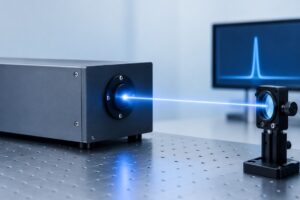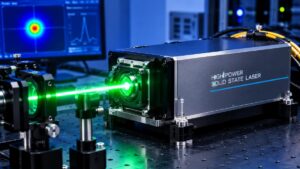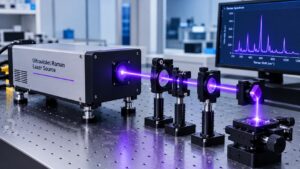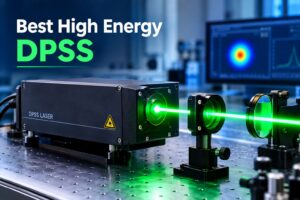
In modern manufacturing, precision is no longer optional — it’s essential. From microelectronics to medical devices, industries demand tighter tolerances, cleaner edges, and repeatable results. This is where the High repetition DPSS laser from Solid Laser plays a transformative role. By combining high pulse frequency with exceptional beam quality, these lasers enable micromachining processes that are faster, cleaner, and far more precise than traditional methods.
The Role of DPSS Lasers in Micromachining
Diode-pumped solid-state (DPSS) lasers are essential in micromachining for processing metals, ceramics, glass, and polymers with high precision. Their stable beam and consistent pulse energy ensure smooth finishes and repeatability. Compared to traditional systems, they offer compact design, high efficiency, and superior beam quality, making them ideal for tasks like micro-drilling, fine cutting, and marking delicate components with accuracy.
Why High Repetition Rate Matters
A High repetition rate DPSS laser significantly enhances micromachining precision by delivering pulses at extremely fast intervals. Instead of removing large amounts of material in a single burst, the laser removes material incrementally with each pulse.
This approach offers several benefits:
- Reduced thermal damage: Smaller, rapid pulses minimize heat buildup, preventing microcracks and deformation.
- Improved surface quality: Consistent pulse delivery results in smoother edges and finer details.
- Higher throughput: Faster repetition rates enable quicker processing without sacrificing accuracy.
Enhanced Beam Quality and Stability
DPSS lasers offer near-perfect beam quality, often operating in TEM₀₀ mode for a highly focused, uniform beam. This enables finer features and sharper edges, essential in semiconductor and medical manufacturing. Their pulse-to-pulse stability also ensures consistent results in large-scale production.
Minimizing Heat-Affected Zones
Heat control is crucial in micromachining, as excess heat can damage materials and reduce lifespan. DPSS lasers use short pulses to limit heat transfer and protect surrounding areas. This results in:
- Minimal heat-affected zones (HAZ)
- Reduced risk of discoloration and stress fractures
- Better preservation of material integrity
These advantages make DPSS lasers ideal for precision applications like medical implants and microelectronics.
Applications in Advanced Manufacturing
High repetition DPSS lasers are widely used across industries that require high precision and reliability. Some key applications include:
- Microelectronics: Cutting and drilling circuit boards, semiconductors, and thin films
- Medical devices: Marking and structuring components with strict regulatory requirements
- Aerospace: Processing high-performance materials with minimal thermal impact
- Scientific research: Enabling techniques like spectroscopy and material analysis
For example, a Laser for LIBS relies on precise pulse delivery to analyze material composition. DPSS lasers are particularly well-suited for this application due to their stability and repeatability.
The Advantage of Dual-Pulse Technology
Another innovation improving micromachining precision is the Dual-pulse DPSS Laser. This technology uses two sequential pulses instead of one, allowing better control over material interaction.
The first pulse prepares the material surface, while the second pulse performs the actual ablation. This results in:
- Enhanced material removal efficiency
- Reduced debris and recast layers
- Improved feature definition
Dual-pulse systems are especially useful in applications requiring ultra-clean cuts or when working with challenging materials.
Solid Laser’s Contribution to Precision Engineering
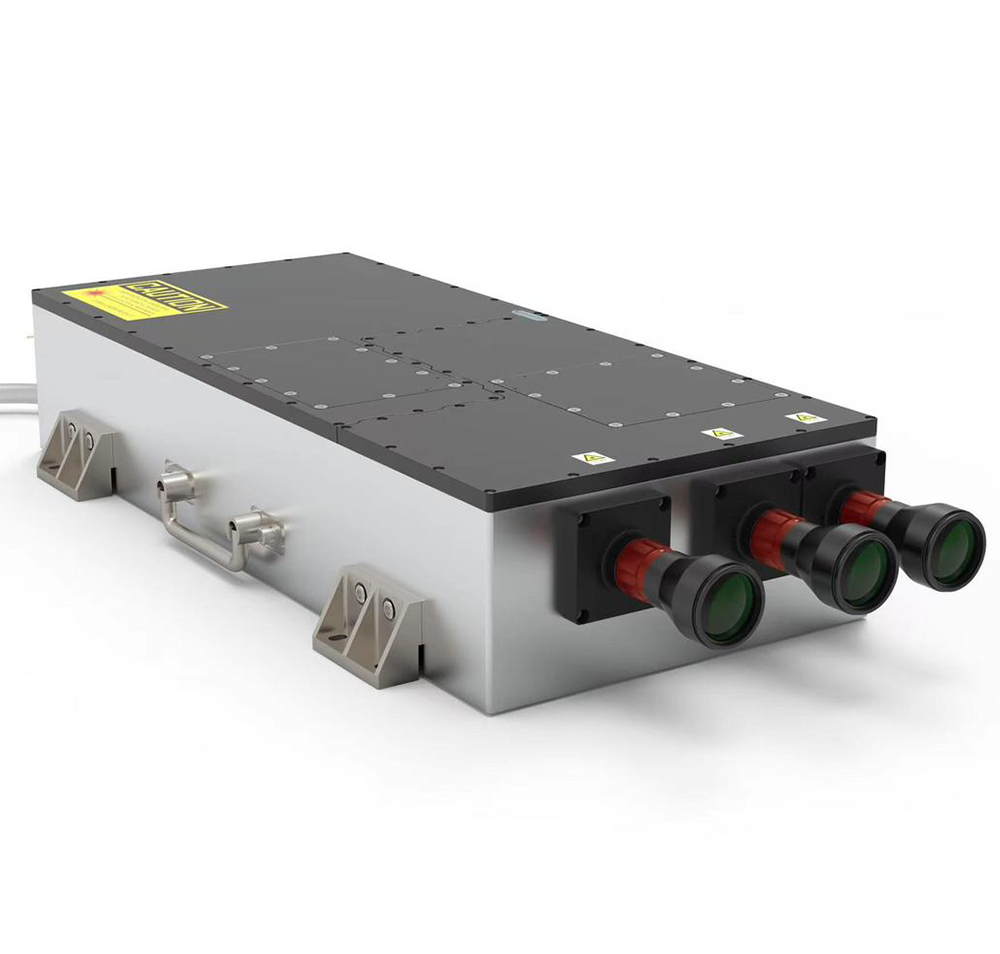
Solid Laser has developed advanced DPSS laser systems designed specifically for high-performance micromachining. Their SHSL series combines high energy output with stable operation and modular design, enabling reliable performance even in demanding industrial environments.
With features such as high stability, precise thermal management, and customizable configurations, they help manufacturers overcome common challenges like inconsistent quality and process inefficiencies. Their systems are engineered to deliver consistent results over long operating periods, making them ideal for both research and industrial production.
Future Trends in Micromachining
As industries continue to demand smaller, more complex components, the role of advanced laser technologies will only grow. Innovations in pulse control, wavelength tuning, and system integration are expected to further enhance the capabilities of DPSS lasers.
High repetition systems, in particular, will play a key role in enabling faster production speeds without compromising precision. Combined with automation and AI-driven process optimization, these lasers will define the next generation of manufacturing.
Conclusion
The High repetition DPSS laser is redefining what’s possible in micromachining. By delivering rapid, precise, and stable pulses, these systems enable manufacturers to achieve exceptional accuracy while maintaining efficiency.
With innovations like dual-pulse technology and advanced system design from Solid Laser, the future of precision manufacturing is not just promising — it’s already here.
FAQs About: High Repetition DPSS Lasers for Micromachining