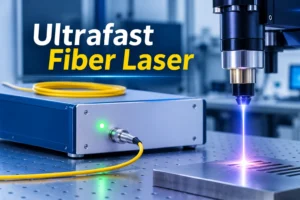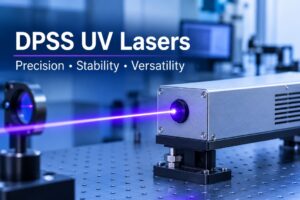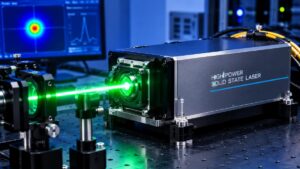
A factory floor has no patience for slow, messy, or unreliable tools. That is why Q-switched solid-state lasers now sit inside so many production lines. They store energy, release it in a burst lasting only nanoseconds, and hit a material with huge peak power. The result is clean marking, precise cutting, fast cleaning, and sharp measurements.
This guide walks through the top industrial applications of these lasers in plain language. You will learn how Q-switching works, where it delivers the biggest gains, and what the latest market numbers say about demand. You will also get a simple checklist for choosing a system. Let’s start with the basics.
What Are Q-Switched Solid-State Lasers?
A solid-state laser uses a solid gain medium. That medium is usually a crystal such as Nd:YAG, doped with rare earth ions. Pump light excites the ions. The crystal stores that energy and releases it as a coherent beam.
Q-switching adds a smart trick. A switch inside the cavity blocks the beam while the crystal charges up. Energy builds to a high level. Then the switch opens, and the crystal dumps everything at once. The Q-switching process turns a steady energy supply into a short, powerful pulse.
Numbers show how dramatic the effect is. Nd:YAG holds its stored energy for roughly 230 microseconds. A Q-switch releases that energy in a few nanoseconds. A 10 millijoule pulse lasting 10 nanoseconds delivers 1 megawatt of peak power. A continuous beam with the same energy would barely scratch the surface.
Active vs Passive Q-Switching
Designers choose between two switch types:
- Active Q-switching: an electro-optic or acousto-optic device opens on command. You control the timing and repetition rate precisely.
- Passive Q-switching: a saturable absorber crystal opens by itself when energy reaches a threshold. The design is simple, compact, and rugged.
Active designs suit systems that need exact timing. Passive designs suit handheld tools and compact modules. Both types appear throughout industry. Now let’s see why factories like them so much.
Why Industry Chooses Solid-State Pulsed Lasers
A solid-state pulsed laser offers a rare mix of power, precision, and reliability. Several advantages explain its popularity:
- High peak power: nanosecond pulses ablate metals, plastics, and ceramics with ease.
- Excellent beam quality: a clean beam focuses to a tiny spot for fine detail.
- Long lifetime: diode pumping lasts far longer than old flashlamp designs.
- Low maintenance: no gas refills or liquid dyes keep downtime low.
- Wavelength flexibility: nonlinear crystals convert infrared light to green and ultraviolet.
- Compact size: a modern module fits inside a handheld analyzer or a small machine.
Compare this with gas lasers. They need refills, complex cooling, and regular service. Solid-state designs cut that overhead. A plant running three shifts feels that difference in its uptime. With the advantages clear, let’s walk through the applications.
Top Industrial Applications of Q-Switched Solid-State Lasers
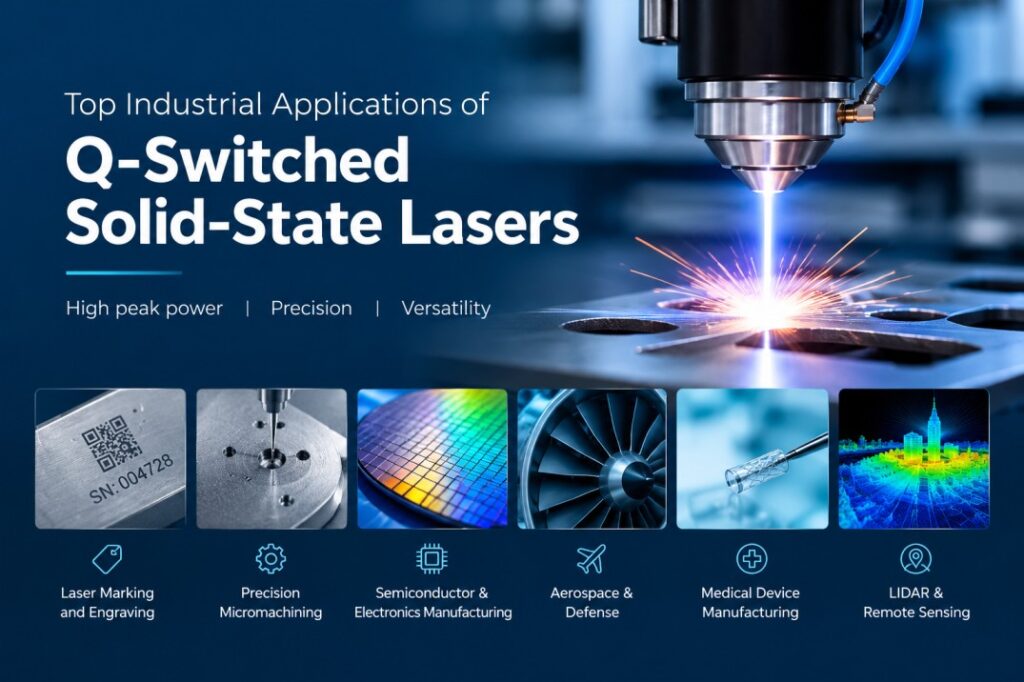
These eight applications show where the technology earns its keep every day.
1. Permanent Marking and Engraving
Marking is the most common industrial use. A short pulse removes or discolors a thin surface layer. The mark stays sharp and permanent. Manufacturers etch serial numbers, barcodes, and logos onto steel, aluminum, and many plastics. Medical device makers use laser marking for traceability codes. Automotive suppliers mark engine parts that must survive heat and oil. Unlike ink, a laser mark never fades or wears off.
2. Micromachining and Scribing
Short pulses remove tiny amounts of material with little heat spread. That precision suits micromachining. Factories drill small holes, cut thin foils, and scribe solar cells and ceramic substrates. Electronics makers use ultraviolet versions to process circuit boards and flexible films. UV light couples strongly into many materials, so it works with less thermal damage. A DPSS laser at 355 nm often handles these delicate jobs.
3. Laser Cleaning and Surface Preparation
Pulsed lasers strip rust, paint, oil, and oxide layers without chemicals or abrasive blasting. Each pulse vaporizes the contaminant but spares the base metal. Shipyards, rail operators, and aerospace shops use this method. It reduces waste and avoids harsh solvents. Mold makers also clean tooling without wearing down fine details. The process is fast, clean, and easy to automate.
4. LIBS and Elemental Analysis
Laser-induced breakdown spectroscopy relies on Q-switched pulses. The laser fires at a sample and creates a tiny plasma. A spectrometer reads the light from the plasma and identifies every element present. Mining crews grade ore on site. Recycling yards sort scrap metal by alloy. Steel producers check composition between production steps. Results arrive in seconds, so crews can act immediately. Compact, passively Q-switched modules make handheld analyzers possible.
5. Rangefinding and LiDAR
Distance measurement depends on timing. A short pulse leaves the laser, bounces off a target, and returns. The system calculates distance from the round trip. Shorter pulses give finer range resolution. Industrial sensors use this principle to measure stock piles, map terrain, and guide machines. Defense and surveying teams use rugged pulsed sources for long-range work. Narrow linewidth versions also support coherent LiDAR and wind sensing.
6. Laser Shock Peening and Heavy Processing
Some jobs need serious pulse energy. Laser shock peening fires powerful pulses at a metal surface. The shock wave compresses the surface layer and adds fatigue resistance. Aerospace companies treat turbine blades and landing gear this way. The process extends part life and reduces cracking. A high energy solid state laser supplies the joule-level pulses these tasks require. Want to compare suppliers in this class? Our guide to the best high energy solid state laser manufacturers breaks down the leading options.
7. Raman Spectroscopy and Chemical Analysis
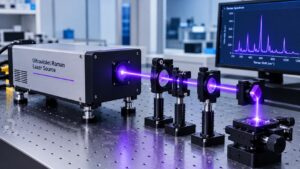
Laboratories use pulsed solid-state sources to drive sensitive chemical analysis. Harmonic crystals convert infrared output to ultraviolet. UV excitation boosts Raman signal strength and avoids fluorescence that blurs visible-light measurements. Pharmaceutical teams verify drug identity and purity this way. Semiconductor labs study materials at fine scales. Environmental teams screen samples for trace contaminants.
8. Scientific Research and Metrology
Research groups depend on stable, repeatable pulses. They pump other lasers, drive nonlinear crystals, and run interferometers. Metrology labs use frequency-stabilized versions as references. Pulse-to-pulse stability matters most here, because small drifts ruin precise measurements. Reliable solid-state platforms give scientists a dependable foundation to build on. These uses show the range. The next question is how big the market has become.
What the Market Numbers Say in 2026
Industrial demand keeps growing. The numbers confirm it.
- Market size: Global Market Insights values the bulk solid-state laser market at 2.3 billion US dollars in 2025.
- 2026 outlook: the same report puts the market at 2.4 billion dollars in 2026.
- Long-term forecast: it projects 5.2 billion dollars by 2035, a CAGR of 8.7%.
- DPSS leads: diode-pumped systems form the largest segment, valued at 1.6 billion dollars in 2025.
Two lessons stand out. First, diode-pumped designs dominate because they last longer and waste less heat. Second, steady growth signals lasting demand from marking, processing, and sensing customers. Buyers who invest in this technology join a healthy, expanding market.
Matching the Laser to the Job
Different factories need different hardware. Three product styles cover most needs.
Compact Modules for Integration
Machine builders and instrument makers want small, light sources. Compact DPSS lasers deliver stable pulses in a tiny footprint. They slot into marking heads, analyzers, and rangefinders. Passive Q-switching trims size and power use even further.
Rugged Designs for Harsh Sites
Mining sites, shipyards, and outdoor sensors expose lasers to dust, vibration, and temperature swings. A ruggedized DPSS laser uses sealed housings, monolithic optics, and tough mounts to survive that abuse. These units keep alignment even after rough transport. Choose them when your laser leaves the clean lab.
Complete Systems and High Power Platforms
Some projects need more than a laser head. A complete DPSS laser system bundles the head, driver, and cooling into one matched package. That approach cuts integration risk. For demanding jobs, a high power solid state laser adds extra output and narrow linewidth. Curious how it compares with diode sources? Read our breakdown of high power solid state laser vs semiconductor laser for a clear side-by-side view.
How to Choose the Right Q-Switched Laser
Work through this checklist before you request quotes.
- Wavelength: 1064 nm suits metal marking and LIBS. 532 nm fits some plastics and ranging. 355 nm and 266 nm serve fine micromachining and Raman work.
- Pulse energy: match it to your material. Marking may need microjoules, while peening needs joules.
- Pulse duration: shorter pulses spread less heat. Sub-nanosecond and nanosecond sources each have a place.
- Repetition rate: higher rates speed up processing. Lower rates suit high-energy single shots.
- Beam quality: ask for measured M² values, not just datasheet claims.
- Stability: request pulse-to-pulse data. A few percent variation or less supports repeatable work.
- Environment: check temperature range, vibration tolerance, and sealing.
- Support: look for OEM engineering help and real test data.
Do not stop at price. A cheap laser that drifts or fails costs more in rejected parts and downtime. Ask suppliers for lifetime data under your real operating conditions. A good partner answers quickly and backs every claim with numbers.
Final Thoughts
Q-switched solid-state lasers turn stored energy into short, powerful pulses that industry can use. They mark parts, machine fine features, clean surfaces, analyze materials, and measure distance with high precision. Compact, rugged, diode-pumped designs now bring that performance to the factory floor and the field.
Solid Laser builds pulsed laser platforms around these strengths. The company supports OEM customers from prototype through production. Define your wavelength, pulse energy, and environment first. Then choose a partner who shares real test data and understands your application.