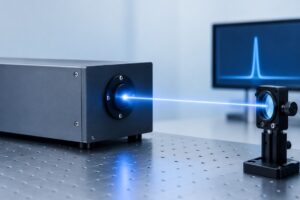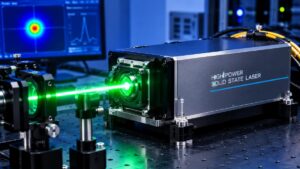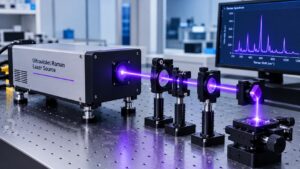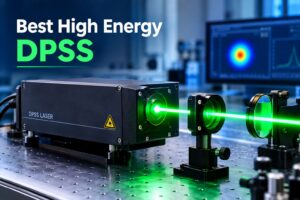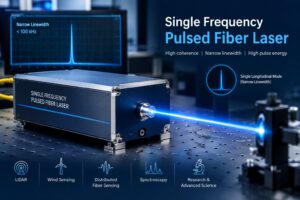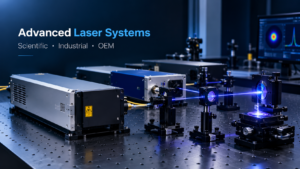
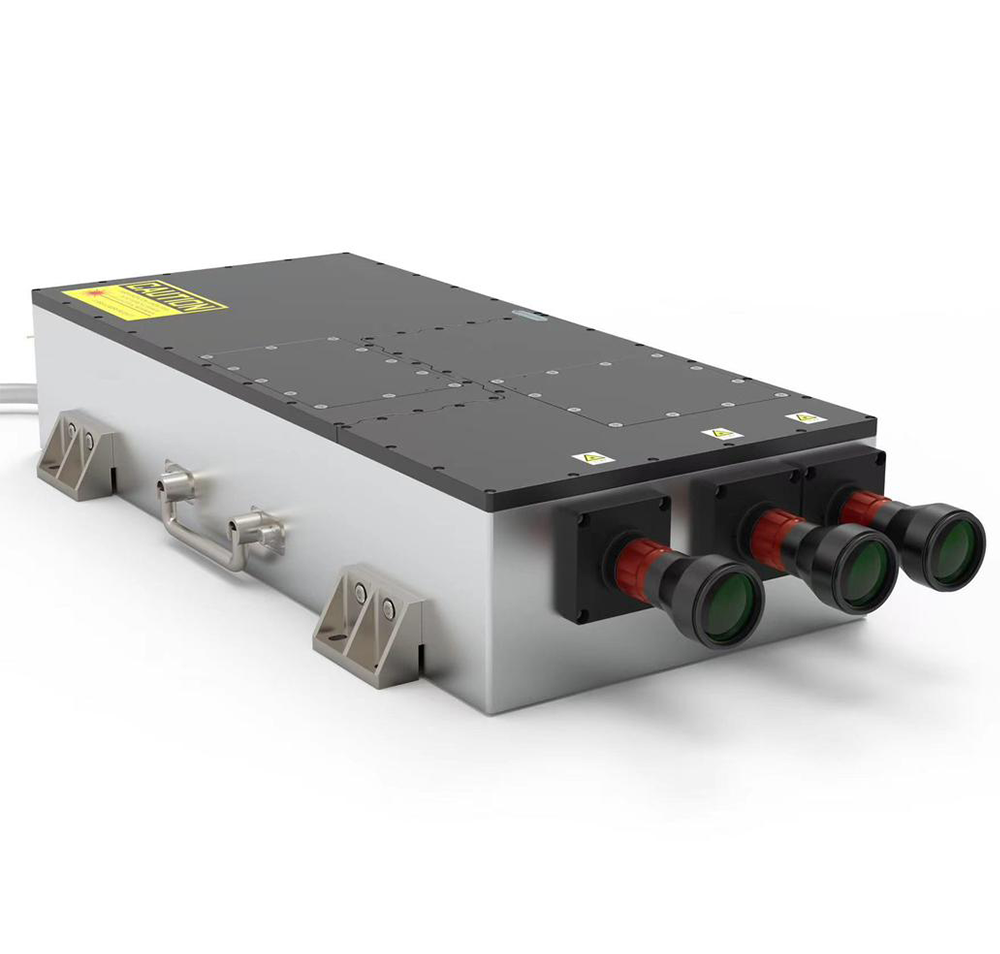
Advanced spectroscopy and molecular study require accurate optical devices that produce a steady wavelength and high beam quality. The Ultraviolet Raman Laser Source is a designed source for Raman spectroscopy where the requirements are the absence of fluorescence, high spectral resolution, and stable output. In many research laboratories and industrial analysis environments, even minor fluctuations in wavelength or beam quality can affect the accuracy of measurements.
As scientific studies continue to expand, there has been a tremendous need for dependable ultraviolet laser systems. Such laser systems provide researchers with an opportunity to achieve clearer Raman signals, examine complicated molecular structures, and make experiments more precise.
What Is an Ultraviolet Raman Laser Source?
A UV Raman laser system is a source of ultraviolet wavelengths of excitation used in the analysis of molecular structures and chemical compositions. In comparison with visible laser sources, ultraviolet excitation can decrease fluorescence interference, enabling researchers to detect weaker Raman signals more effectively.
A high-performance UV Raman laser offers constant wavelength performance and narrow linewidth behavior, making it ideal for high-quality spectroscopy experiments. Key capabilities include:
- Produces ultraviolet excitation wavelengths for Raman spectroscopy
- Reduces fluorescence interference in biological samples
- Offers stable narrow-linewidth laser output
- Enables spectral analysis at high resolution
- Enhances the clarity of signals during molecular detection
Core Technology Behind UV Raman Laser Systems
Modern Raman laser systems are designed with advanced solid-state laser technology and nonlinear optical conversion processes. These devices transform longer-wavelength lasers into ultraviolet wavelengths by using specialized optical crystals.
Most systems are constructed as an All-solid-state UV laser with high stability, compact design, and long active lifespan. Solid-state laser platforms do not need complex gas-based components and provide reliable performance over long-term scientific studies.
Typical UV Raman laser architecture includes:
- Constant frequency laser source
- Nonlinear optical crystals for UV frequency conversion
- Precision optical cavity for beam stabilization
- Temperature control cooling system
- Electronic feedback control for output power stability
These integrated components ensure reliable performance in high-precision spectroscopy applications.
Importance of Ultraviolet Excitation in Raman Spectroscopy
In Raman spectroscopy, ultraviolet excitation offers significant benefits over visible light sources. At UV wavelengths, the effect of Raman scattering is enhanced as fluorescence interference is significantly reduced through UV wavelength interaction with molecules.
This enables scientists to analyze complex samples like biological tissues, organic materials, and chemical elements with greater clarity. Key benefits include:
- Higher Raman scattering efficiency
- Reduced background fluorescence
- Improved spectral resolution
- Enhanced detection sensitivity
- Reliable measurement accuracy
Key Performance Features of UV Raman Laser Systems
High-performance UV Raman lasers are designed to provide controllable wavelength, consistent beam output, and low environmental sensitivity. These properties guarantee repeatability and accuracy in spectroscopy.
- Narrow Linewidth Output: A small linewidth ensures the laser emits light within a very small spectral range. This is essential for high-resolution spectroscopy and precise molecular analysis.
- TEM00 Beam Quality: TEM00 beam quality delivers a uniform Gaussian beam profile, providing maximum focusing and effective interaction between the sample and the laser light.
- Stable Output Power: Constant laser intensity is essential for consistent Raman signal intensity in experiments. Power variations can cause measurement errors or signal noise.
- Advanced Thermal Management: Temperature changes can affect laser wavelength stability. Modern UV Raman systems use thermal control modules to maintain consistent operating conditions.
- Reliable Solid-State Operation: Several systems rely on Ultraviolet Raman Solid-State Laser technology to guarantee stable performance and long operational lifespan in research environments.
Applications in Scientific and Industrial Research
UV Raman laser systems are widely used across scientific and industrial sectors. Their ability to produce specific ultraviolet wavelengths makes them ideal for high-end molecular analysis and spectroscopy experiments.
- Pharmaceutical Research: Raman spectroscopy is used by pharmaceutical laboratories to study drug compounds, analyze chemical structures, and monitor pharmaceutical manufacturing processes.
- Materials Science: Researchers studying nanomaterials, polymers, and other advanced materials use UV Raman lasers to examine molecular structures and chemical bonding.
- Chemical Analysis: UV Raman spectroscopy can detect unknown compounds and trace chemical reactions with high sensitivity.
- Environmental Monitoring: Laser-based spectroscopy systems support pollutant detection, analysis of environmental samples, and environmental safety research.
- Semiconductor Research: High-precision spectroscopy systems help analyze semiconductor materials and evaluate structural properties in electronic devices.
Integration with Advanced Laser Platforms
Ultraviolet Raman systems are often combined with powerful laser platforms in laboratories to increase performance and experimental capabilities. Solid-state laser platforms are characterized by stability in beam quality and operation.
Integration with modern optical systems allows researchers to achieve:
- Improved measurement sensitivity
- Greater experimental accuracy
- Better wavelength control
- Enhanced long-term stability
- Reliable performance in demanding research environments
Advantages Over Conventional Laser Sources
Compared to conventional visible-light Raman laser systems, ultraviolet systems offer better signal clarity and improved capability to detect weak Raman signals. These properties make UV Raman lasers extremely useful in modern scientific equipment.
- Reduced fluorescence interference
- Higher signal-to-noise ratio
- Improved spectral resolution
- Higher precision of analysis
- Improved molecular detection sensitivity
Thermal and Noise Control Mechanisms
Environmental stability is significant for ensuring the precision of laser-based spectroscopy systems. High-end UV Raman lasers include noise reduction features and thermal stabilization measures to ensure performance consistency.
- Multi-zone temperature regulation
- Low-noise electronic drivers
- High-stability optical cavities
- Active feedback control systems
- Shielded optical pathways
These mechanisms stabilize accurate wavelength output and ensure reliable measurements during long-term experimentation.
Conclusion
The Ultraviolet Raman Laser Source has become an essential tool in modern spectroscopy and scientific research. Its capacity to produce constant ultraviolet light helps reduce fluorescence interference, improve spectral clarity, and enhance molecular analysis precision. These benefits ensure that UV Raman lasers are invaluable in laboratories working in chemistry, materials science, pharmaceuticals, and environmental studies.
Companies like Solid Laser continue to develop advanced laser systems designed for precision research and industrial applications. With technologies such as the All-solid-state UV laser, these systems deliver reliable performance, strong beam stability, and long-term operational efficiency for next-generation spectroscopy and photonics applications.
FAQs About: Ultraviolet Raman Laser Source