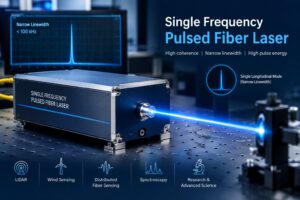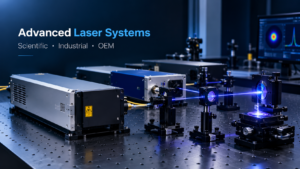

Modern industries and research laboratories demand laser technologies that deliver exceptional precision, stability, and efficiency. Among the most reliable solutions available today are DPSS Pulsed Lasers, widely recognized for their compact structure, high beam quality, and dependable performance across multiple applications. From semiconductor processing and scientific instrumentation to medical systems and advanced manufacturing, these lasers have become essential tools for achieving highly accurate results.
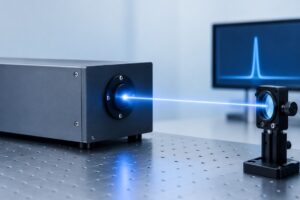
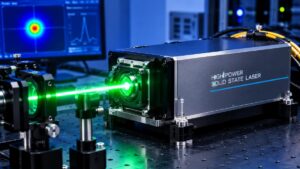
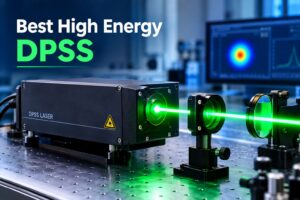
A DPSS laser system uses a solid-state gain medium pumped by semiconductor laser diodes, offering better energy efficiency and thermal management compared to traditional gas lasers. Their compact footprint, low maintenance requirements, and ability to generate stable pulsed outputs make them ideal for industrial and scientific environments where precision is critical.
Why Compact DPSS Laser Systems Are Ideal for Industrial and Scientific Applications
Compact laser technology has transformed modern manufacturing and research operations. A well-designed DPSS laser system combines portability, efficiency, and high optical performance without compromising stability or output quality.
One major advantage of compact DPSS Pulsed Lasers systems is their space-saving architecture. Laboratories and production facilities often require equipment that integrates seamlessly into automated systems or confined workspaces. Compact laser modules simplify installation while reducing infrastructure costs and improving workflow efficiency.
Industrial sectors particularly benefit from the precision capabilities of compact DPSS lasers. Applications include:
- Micro-machining and precision engraving
- Semiconductor wafer inspection
- PCB drilling and cutting
- Biomedical imaging
- Spectroscopy and analytical instrumentation
- Marking and coding systems
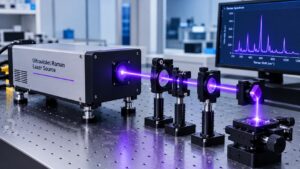
In scientific research, compact laser systems provide excellent beam consistency and wavelength stability. Researchers rely on these lasers for experiments requiring controlled pulse energy and minimal fluctuations over extended operational periods.
How Q-Switched and Pulsed Solid-State Lasers Improve Precision and Stability
Precision applications often require high peak power delivered in extremely short bursts. This is where Q-switched Solid-state Lasers and pulsed laser technologies offer significant advantages.
Q-switching is a laser operation technique designed to generate intense laser pulses with very short durations. Instead of emitting continuous energy, the laser stores energy within the gain medium and releases it rapidly as a powerful pulse. This process produces exceptionally high peak power while maintaining excellent beam quality.
The ability to generate short and intense pulses makes Q-switched lasers highly effective for precision material processing. These lasers minimize thermal damage because energy is concentrated into very short intervals, reducing heat transfer to surrounding materials.
Industries commonly use Q-switched lasers for:
- Laser marking and engraving
- Precision cutting
- Thin-film removal
- Micromachining
- Surface texturing
- Medical and cosmetic procedures
A Solid-state pulsed laser also offers improved operational stability. Pulsed output enables precise control over pulse duration, repetition rate, and energy delivery. This level of control is especially important in applications involving sensitive materials or microscopic processing requirements.
In scientific applications, pulsed solid-state lasers support advanced measurement techniques such as time-resolved spectroscopy, fluorescence analysis, and nonlinear optics research. Their consistent pulse timing and stable output characteristics help researchers achieve highly repeatable results.
Another critical advantage is superior beam quality. High-quality beam profiles allow lasers to focus energy into extremely small spots, enabling ultra-precise processing with minimal distortion or collateral damage.
Furthermore, modern DPSS Pulsed Lasers systems are designed with advanced thermal management mechanisms that improve long-term operational reliability. Efficient cooling and stable optical alignment ensure consistent performance even during extended usage cycles.
Applications of DPSS Pulsed Lasers Technology Across Industries
The versatility of DPSS laser technology has expanded its role across a broad range of industries. Manufacturers and researchers prefer these systems because they combine precision, reliability, and operational flexibility.
- Electronics and Semiconductor Manufacturing: In electronics production, laser precision is essential for creating miniature components and intricate circuit designs. DPSS Pulsed Lasers are widely used for wafer scribing, micro-drilling, trimming resistors, and fine marking applications.
- Medical and Aesthetic Procedures: Medical professionals use pulsed solid-state lasers for dermatology, tattoo removal, ophthalmology, and surgical procedures. Short pulse durations allow precise tissue interaction while minimizing thermal damage to surrounding areas.
- Scientific Research: Research laboratories rely on DPSS laser systems for spectroscopy, interferometry, optical trapping, and advanced photonics experiments. Stable pulse control improves measurement accuracy and experimental consistency.
- Industrial Manufacturing: Industrial sectors utilize DPSS lasers for engraving, cutting, welding, and surface treatment processes. Their ability to deliver controlled high-energy pulses supports accurate material processing with reduced waste.
- Defense and Aerospace: High-performance laser systems are also used in defense applications, range finding, targeting systems, and aerospace research due to their durability and precision capabilities.
Choosing the Right DPSS Laser Solution
Selecting the ideal laser system depends on application requirements, wavelength preferences, pulse duration, and power output needs. Businesses and laboratories should evaluate factors such as:
- Beam quality requirements
- Pulse repetition frequency
- Cooling system efficiency
- Operational stability
- Integration compatibility
- Maintenance requirements
Modern laser manufacturers offer customizable DPSS solutions tailored to specific industrial and scientific applications. Systems are available in multiple wavelengths and power ranges to accommodate both research-grade and industrial-scale operations.
Reliable suppliers also provide integrated control software and automation support, helping organizations streamline operations while maximizing precision and productivity.
For advanced laser technologies and industrial-grade systems, explore the complete range available at Solid Laser.
Conclusion
As industries continue to demand greater precision, efficiency, and reliability, DPSS Pulsed Lasers remain one of the most advanced solutions for scientific and industrial applications. Their compact structure, excellent beam quality, stable pulse performance, and low maintenance requirements make them ideal for high-precision tasks across electronics, healthcare, manufacturing, and research sectors.
Whether used for micromachining, spectroscopy, medical procedures, or semiconductor processing, modern DPSS laser technologies deliver the accuracy and consistency required for today’s most demanding applications. By combining compact engineering with advanced pulsed and Q-switched capabilities, these laser systems continue to drive innovation across multiple industries.
FAQs About: DPSS Pulsed Lasers