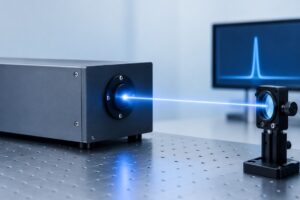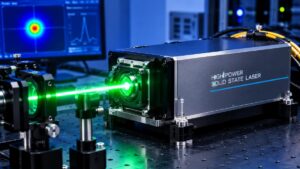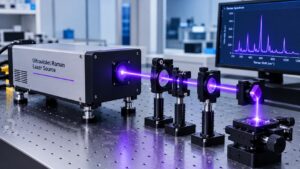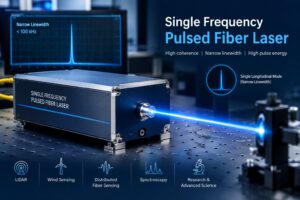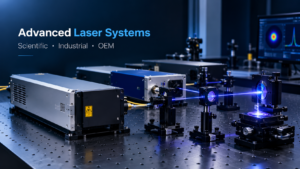

Laser technology is widely used in industries such as manufacturing, medicine, electronics, scientific research, and communication systems. Among the many laser technologies available today, Compact DPSS Lasers are highly valued because of their compact design, stable performance, and energy efficiency. These lasers provide high-quality beams while consuming less power compared to traditional laser systems.
DPSS stands for “Diode Pumped Solid State.” These lasers use semiconductor laser diodes to pump a solid-state gain medium and generate laser output. Because of their precision and reliability, Compact DPSS Lasers are commonly used in industrial processing, engraving, spectroscopy, medical devices, and laboratory experiments.
Modern laser systems are designed to deliver excellent beam quality and stable operation even in demanding environments.
Understanding the Working Principle of Compact DPSS Lasers
The working process of Compact DPSS Lasers begins with a semiconductor laser diode. The diode acts as the pump source and converts electrical energy into optical energy.
This optical energy excites the atoms inside a solid-state crystal such as Nd:YAG or Nd:YVO4. Once energized, the atoms move into an excited state. When they return to their normal state, they release photons that generate laser light.
Inside the optical cavity, mirrors reflect photons repeatedly through the gain medium. This process amplifies the light intensity until a strong laser beam is produced. One mirror partially allows the amplified light to escape as the final laser output.
One of the major advantages of these lasers is their ability to produce stable and highly focused beams with excellent energy efficiency. For example, companies like Solid Laser develop advanced DPSS laser solutions that highlight these benefits in real-world industrial applications. Their compact structure also makes them suitable for portable devices and industrial systems with limited space.
Main Components of a DPSS Laser System
A modern DPSS laser system contains several important components that work together to generate efficient laser output.
- Laser Diode: The laser diode serves as the pump source of the system. It converts electrical energy into optical energy and transfers it to the gain medium. Modern laser diodes are highly efficient and help reduce power consumption while maintaining stable performance.
- Solid-State Gain Medium: The gain medium is the core component where laser generation occurs. Materials such as Nd:YAG and Nd:YVO4 crystals are commonly used in DPSS systems. When energized by the laser diode, the crystal emits photons that are amplified within the optical resonator.
- Optical Resonator: The optical resonator contains mirrors placed around the gain medium. These mirrors reflect photons back and forth, increasing light intensity. One mirror partially transmits light to produce the final laser beam output.
- Cooling System: Temperature management is essential for maintaining laser stability. Many Compact DPSS Lasers include air cooling or water cooling systems to manage heat during operation. Proper cooling improves performance and extends the lifespan of laser components.
- Control Electronics: The control system manages power supply, pulse timing, operating temperature, and overall laser operation. Advanced electronics help maintain precise laser performance in industrial and scientific applications.
What Are DPSS Pulsed Lasers?
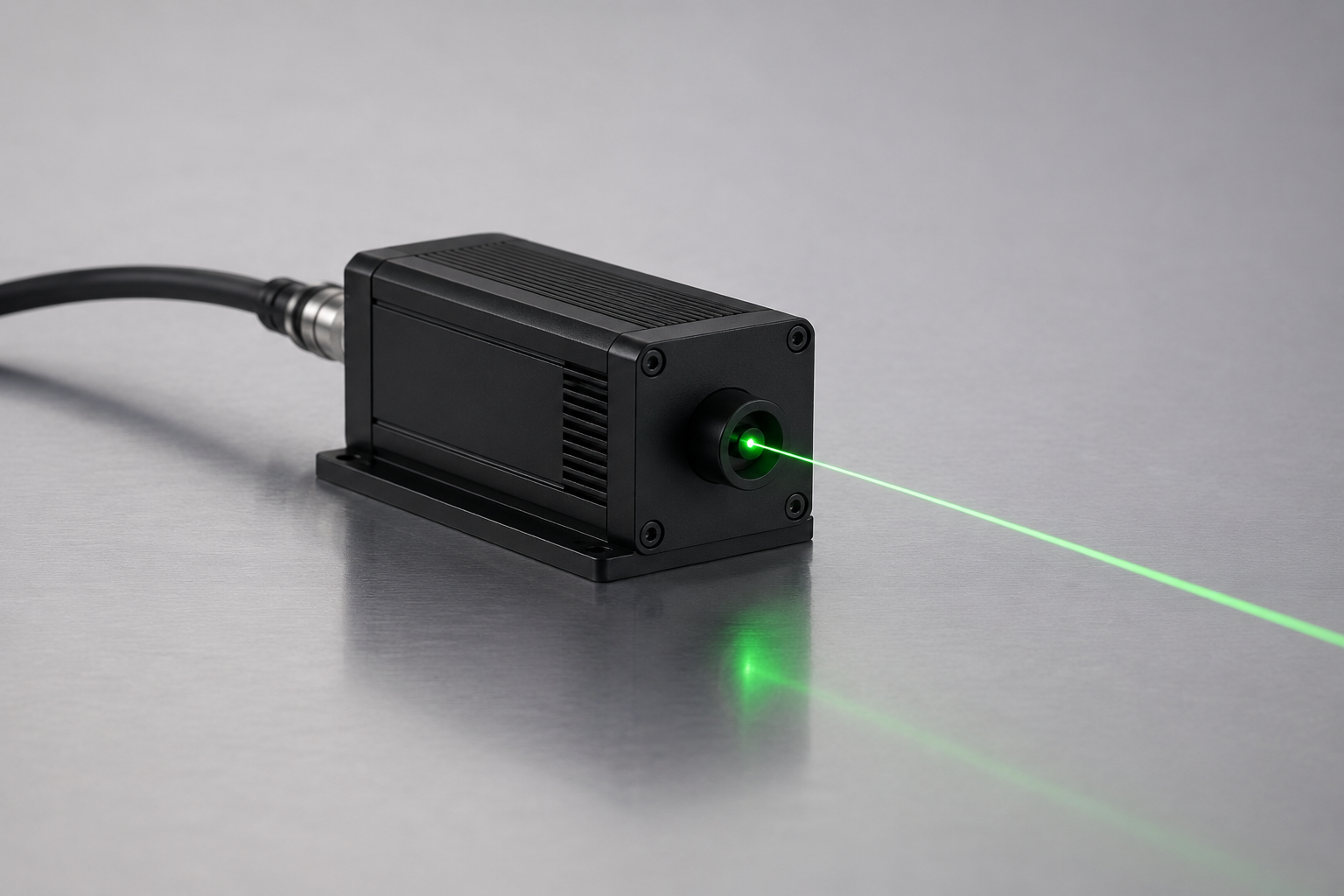
DPSS Pulsed Lasers are designed to generate laser beams in short pulses rather than continuous output. Pulsed lasers can produce very high peak power within extremely short durations.
These lasers are widely used in:
- Laser marking
- Material processing
- Medical treatments
- Scientific experiments
- Micro-machining
Because pulse energy can be controlled accurately, DPSS Pulsed Lasers provide excellent precision while minimizing heat damage to surrounding materials. When integrated with Ultrafast fiber laser technology, they can achieve even higher processing speeds and finer material interaction for demanding applications. Their compact size and efficient performance make them suitable for advanced industrial and laboratory systems.
Advantages of Compact DPSS Lasers
Modern Compact DPSS Lasers provide several advantages compared to traditional laser technologies.
- High Energy Efficiency: DPSS lasers use diode pumping technology, which provides efficient energy conversion and reduces energy waste.
- Compact Design: One of the biggest benefits is their small size. Compact construction allows easy integration into industrial equipment and portable systems.
- Excellent Beam Quality: These lasers generate highly stable and focused beams, making them suitable for precision applications.
- Long Operational Life: Semiconductor laser diodes are durable and reliable, allowing DPSS systems to operate for long periods with lower maintenance requirements.
- Reduced Heat Generation: Efficient energy conversion minimizes heat production and helps maintain stable system performance.
Applications of Compact Diode Pumped Solid State Lasers
Because of their precision and reliability, Compact Diode-Pumped Solid-State Lasers are used across multiple industries.
- Industrial Manufacturing: Manufacturers use DPSS lasers for cutting, engraving, drilling, welding, and laser marking applications.
- Medical Applications: Medical systems use DPSS technology in dermatology, surgery, and ophthalmology because of its precise energy delivery.
- Scientific Research: Researchers use DPSS lasers in spectroscopy, microscopy, holography, and laboratory experiments requiring stable laser beams.
- Electronics and Communication: Laser systems also support semiconductor manufacturing, optical communication, and electronic testing.
- Defense and Aerospace: Many defense and aerospace systems use Solid-state pulsed laser technology for sensing, targeting, and advanced optical applications.
Conclusion
Laser technology continues evolving across industries, and Compact DPSS Lasers have become an important solution for applications requiring precision, efficiency, and compact design. Their ability to generate stable and high-quality laser beams makes them valuable in manufacturing, medicine, electronics, and scientific research.
With experts like Solid Laser and advanced components such as laser diodes, solid-state gain media, cooling systems, and precision control electronics, a modern DPSS laser system delivers reliable and energy-efficient performance.
Additionally, technologies like Short-pulse DPSS laser, DPSS Pulsed Lasers, and Solid-state pulsed laser systems provide controlled and powerful laser output for specialized industrial applications, enabling high-speed material processing, micromachining, and precision marking. As industries continue demanding compact and high-performance laser solutions, DPSS technology will remain an important part of future laser innovation.
FAQs About: Compact DPSS Lasers
1. What are Compact DPSS Lasers?
2. What are DPSS Pulsed Lasers used for?
3. What is a DPSS laser system?
4. What are the advantages of solid-state pulsed lasers?
5. Why are Compact DPSS Lasers popular in industries?