Accurate measurement and calibration are critical in industries such as semiconductor manufacturing, aerospace, precision metrology, and scientific research. However, frequency drift can gradually reduce measurement accuracy, leading to calibration errors, production delays, and higher operational costs. Even minor frequency variations can affect product quality and compromise compliance with strict industry standards.
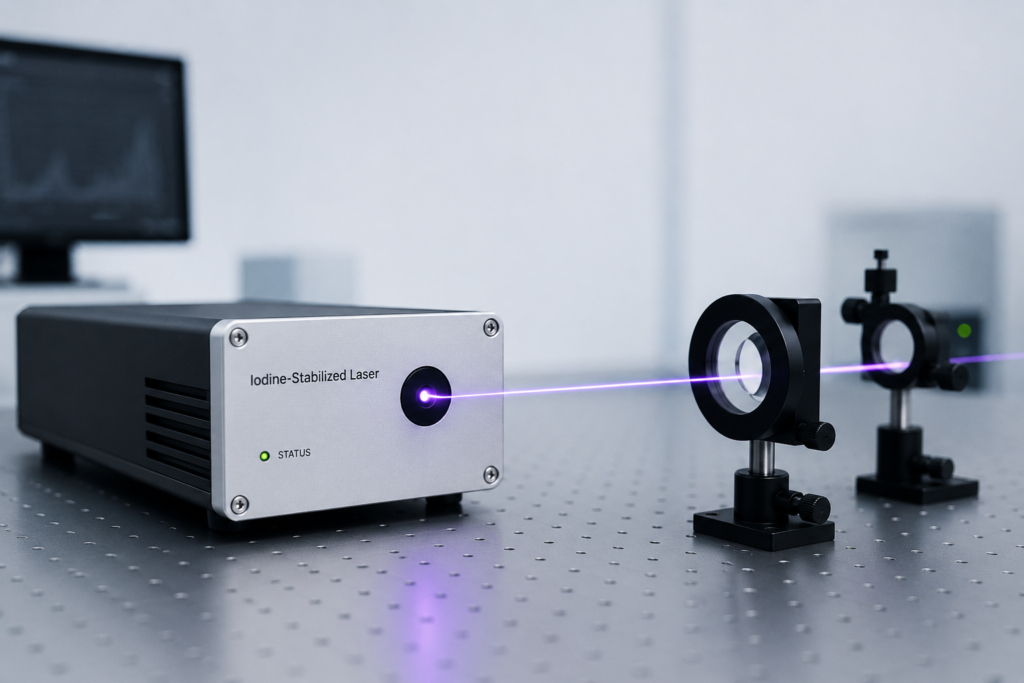
An Iodine-stabilized laser provides a reliable solution by delivering exceptional frequency stability and repeatable performance over long operating periods. Unlike conventional laser systems, it maintains a consistent optical frequency, ensuring precise measurements in demanding applications. Whether you’re upgrading an existing system or building a new precision measurement setup, selecting the right Iodine-stabilized laser can significantly improve accuracy, efficiency, and long-term reliability. In this guide, we’ll explore the causes of frequency drift, how an Iodine-stabilized laser solves it, and why leading manufacturers trust Solid Laser for advanced laser solutions.
What Is Frequency Drift and Why Should Manufacturers Care?
Frequency drift refers to the gradual change in a laser’s output frequency over time. Although this variation may seem insignificant, it can create major problems in applications where micron-level precision or absolute frequency accuracy is essential.
Several factors contribute to frequency drift, including:
- Temperature fluctuations
- Mechanical vibrations
- Aging optical components
- Electrical instability
- Environmental changes
Even a slight frequency shift can compromise the accuracy of precision instruments, leading to unreliable measurements and increased production costs.
For manufacturers and laboratories, frequency drift often results in:
- Reduced measurement accuracy
- Frequent recalibration requirements
- Higher maintenance expenses
- Increased product rejection rates
- Inconsistent quality control
- Lower productivity
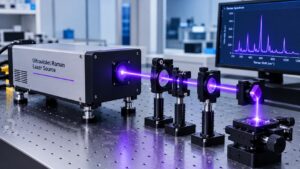
When used as an Ultraviolet Raman laser source, an Iodine-stabilized laser addresses these challenges by maintaining an exceptionally stable optical frequency, enabling consistent measurement performance throughout long operating periods.
The Hidden Cost of Frequency Drift
Many organizations underestimate how much frequency instability affects their daily operations. While the issue may not be immediately visible, its impact becomes significant over weeks and months of continuous operation.
1. Inaccurate Calibration
Calibration systems rely on stable reference lasers. If the laser frequency changes, calibration results become unreliable, forcing laboratories to repeat procedures and increasing operational costs.
An Iodine-stabilized laser provides a dependable optical reference that significantly improves calibration confidence.
2. Lower Product Quality
Industries such as aerospace, semiconductor manufacturing, and precision optics require exceptional dimensional accuracy. Frequency drift can introduce measurement deviations that affect final product quality.
Using an Iodine-stabilized laser helps manufacturers maintain tighter tolerances and reduce quality issues.
3. Production Downtime
Unexpected recalibration interrupts manufacturing schedules and lowers equipment utilization. Frequent maintenance also increases labor costs.
Stable laser performance minimizes interruptions, enabling continuous production with greater confidence.
4. Compliance Challenges
Many industries must comply with strict international quality standards. Inconsistent measurements caused by frequency drift can complicate audits and certification processes.
An Iodine-stabilized laser supports reliable traceability and helps organizations meet demanding calibration requirements.
Why Conventional Laser Systems Struggle with Frequency Stability
Standard laser systems are suitable for many general-purpose applications, but they often face limitations in environments that require long-term frequency stability.
Some common challenges include:
Environmental Sensitivity
Changes in ambient temperature and humidity can influence optical cavity dimensions, resulting in frequency variations.
Mechanical Vibrations
Industrial facilities expose laser equipment to continuous vibration, which can affect beam stability and frequency accuracy.
Component Aging
Over time, optical coatings, electronic drivers, and laser crystals naturally degrade, causing gradual performance changes.
Electrical Noise
Power fluctuations introduce instability into laser output, particularly in high-precision measurement systems.
Because of these factors, many manufacturers eventually experience inconsistent measurement results, despite using advanced equipment. An Iodine-stabilized laser is specifically engineered to eliminate these limitations through highly stable frequency locking techniques.
How Does an Iodine-Stabilized Laser Solve Frequency Drift?
The core advantage of an Iodine-stabilized laser lies in its ability to lock the laser frequency to well-defined molecular iodine absorption lines. These naturally occurring optical references remain extremely stable, making them ideal for precision measurement applications.
Instead of allowing the laser frequency to drift freely, the stabilization system continuously monitors and corrects frequency deviations.
This provides several important benefits:
- Exceptional long-term stability
- Highly repeatable measurements
- Reduced calibration uncertainty
- Improved instrument reliability
- Lower maintenance requirements
- Better compliance with international metrology standards
For organizations that depend on precise optical measurements, an Iodine-stabilized laser delivers the consistency needed to maintain confidence in every measurement.
Industries That Cannot Afford Frequency Drift
As manufacturing technologies become increasingly advanced, the demand for highly stable laser systems continues to grow.
Semiconductor Manufacturing
Tiny dimensional errors can lead to defective chips and reduced production yields. Stable laser references help maintain accurate inspection and alignment systems.
Precision Metrology
Calibration laboratories depend on an Iodine-stabilized laser to establish reliable optical frequency references for high-accuracy measurements.
Aerospace Manufacturing
Aircraft and satellite components require strict dimensional verification. Stable laser systems reduce measurement uncertainty throughout the manufacturing process.
Scientific Research
Research institutions conducting spectroscopy, optical physics, and quantum experiments require dependable frequency references to produce repeatable experimental results.
Advanced Industrial Manufacturing
Manufacturers integrating a High energy solid state laser into high-precision processes often require stable reference systems to ensure consistent performance across production cycles.
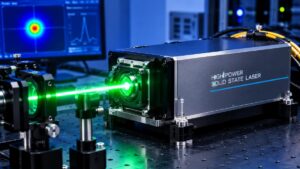
Similarly, a High power solid state laser used for demanding industrial applications benefits from accurate calibration supported by frequency-stable reference lasers.
Beyond Stability: Building a Reliable Precision Measurement System
An Iodine-stabilized laser is most effective when integrated into a complete precision measurement workflow. Many modern facilities combine stabilized reference lasers with complementary technologies to achieve higher accuracy and operational efficiency.
For example, systems utilizing a 3.5GHz frequency-shifted laser can benefit from precise frequency referencing during advanced optical measurements. Likewise, a Ruggedized DPSS laser is often selected for harsh industrial environments where durability and stable performance are equally important.
In specialized research and spectroscopy applications, technologies such as an Ultraviolet Raman laser source and a Femtosecond fiber laser are frequently used alongside stabilized laser references to support complex analytical and ultrafast measurement tasks.
Selecting the right combination of laser technologies enables manufacturers to build robust, future-ready measurement systems capable of meeting evolving industry demands.
Why Choose Solid Laser for Precision Laser Solutions?
When precision, stability, and long-term reliability matter, partnering with an experienced laser manufacturer is essential.
Solid Laser develops advanced laser technologies that support manufacturers, metrology laboratories, research institutions, and OEMs in achieving consistent measurement accuracy. Our solutions are engineered to deliver dependable performance in demanding industrial and scientific environments, helping organizations reduce downtime, improve calibration confidence, and enhance overall productivity.
How an Iodine-Stabilized Laser Eliminates Frequency Drift
Unlike conventional laser systems that experience gradual frequency changes over time, an Iodine-stabilized laser is designed to maintain an exceptionally stable optical frequency. It achieves this by locking the laser output to the well-defined absorption lines of iodine molecules, which serve as a highly accurate and reliable frequency reference.
This stabilization process continuously monitors the laser’s output and automatically corrects any deviation caused by environmental or operational changes. As a result, an Iodine-stabilized laser delivers long-term stability, repeatable measurements, and superior calibration accuracy.
For industries where even the smallest measurement error can affect product quality or research outcomes, this level of precision is invaluable.
Key Benefits of Using an Iodine-Stabilized Laser
1. Exceptional Frequency Stability
The primary advantage of an Iodine-stabilized laser is its ability to maintain a constant optical frequency over extended periods. This stability minimizes measurement uncertainty and ensures consistent performance, even in demanding environments.
Whether used for calibration or precision inspection, a stable laser source improves confidence in every measurement.
2. Higher Calibration Accuracy
Calibration laboratories rely on precise reference standards to verify measuring instruments. A slight frequency shift can introduce significant errors into the calibration process.
An Iodine-stabilized laser provides an accurate optical reference, helping laboratories achieve reliable, traceable, and repeatable calibration results while reducing the need for frequent adjustments.
3. Improved Measurement Repeatability
Manufacturers often perform thousands of measurements every day. If laser frequency changes between measurements, the results become inconsistent.
Using an Iodine-stabilized laser ensures every measurement is based on the same stable frequency reference, improving repeatability across production batches and reducing quality variations.
4. Lower Maintenance and Downtime
Frequent recalibration and system adjustments increase maintenance costs and interrupt production schedules.
Because an Iodine-stabilized laser maintains stable performance over long periods, maintenance intervals are reduced, allowing manufacturers to improve equipment availability and production efficiency.
5. Compliance with International Standards
Industries such as aerospace, semiconductor manufacturing, and national metrology laboratories must comply with strict quality and traceability requirements.
An Iodine-stabilized laser supports accurate calibration procedures that help organizations meet regulatory standards and maintain confidence during audits and inspections.
Applications of an Iodine-Stabilized Laser Across Industries
The demand for highly stable laser systems continues to grow as manufacturers strive for greater precision and process reliability.
Precision Metrology
Metrology laboratories use an Iodine-stabilized laser as a frequency reference for interferometers and other high-precision measurement systems. Stable laser output enables highly accurate dimensional measurements and supports traceability to international standards.
Semiconductor Manufacturing
Semiconductor fabrication requires extremely precise alignment, inspection, and calibration processes. Even microscopic errors can affect chip performance and manufacturing yield.
By integrating an Iodine-stabilized laser, manufacturers can improve measurement consistency and reduce costly production defects.
Aerospace and Defense
Aerospace components demand tight dimensional tolerances and rigorous quality control. Stable optical references help engineers perform accurate inspections and maintain product reliability.
An Iodine-stabilized laser supports high-precision measurement systems used throughout aerospace manufacturing and testing.
Scientific Research
Universities, research institutes, and national laboratories depend on stable laser sources for spectroscopy, interferometry, quantum optics, and optical frequency experiments.
The long-term stability of an Iodine-stabilized laser makes it an ideal solution for experiments that require highly repeatable results.
Advanced Manufacturing
Manufacturers producing precision optics, medical devices, and electronic components require dependable measurement systems to maintain product quality.
An Iodine-stabilized laser helps improve inspection accuracy while reducing measurement uncertainty across production lines.
Supporting Technologies That Enhance Precision
Modern manufacturing facilities often combine multiple laser technologies to optimize performance for specific applications.
For high-power material processing, a High energy solid state laser delivers the energy required for demanding industrial tasks. When paired with stable calibration references, manufacturers can achieve more consistent production results.
Similarly, a High power solid state laser is widely used in cutting, welding, and advanced manufacturing applications. Accurate calibration supported by a stable optical reference helps maintain reliable system performance over time.
Some precision optical systems also integrate a 3.5GHz frequency-shifted laser to support advanced interferometry and frequency-sensitive measurements. Using stable reference lasers alongside these systems improves measurement accuracy and repeatability.
Why Manufacturers Choose Solid Laser
Selecting the right laser supplier is just as important as choosing the right technology. Manufacturers need reliable products backed by technical expertise and long-term support.
Solid Laser provides advanced laser solutions designed for precision measurement, industrial manufacturing, scientific research, and OEM integration. Our engineering team focuses on delivering laser systems that offer outstanding frequency stability, dependable performance, and long service life.
Whether you’re upgrading an existing calibration setup or developing a new precision measurement system, Solid Laser can help you identify the ideal solution for your application.
Looking to eliminate frequency drift and enhance calibration accuracy? Contact Solid Laser today to learn how our Iodine-stabilized laser solutions can help you achieve reliable, repeatable, and high-precision measurements. Request a consultation today!
Choosing the Right Iodine-Stabilized Laser for Your Application
Selecting the right Iodine-stabilized laser depends on your industry’s accuracy requirements, operating environment, and application goals. While many laser systems provide stable output, not all are suitable for high-precision measurement or calibration.
Before investing in an Iodine-stabilized laser, consider the following factors:
Frequency Stability
Choose a system that offers exceptional long-term frequency stability to ensure consistent measurements and reduce recalibration needs.
Application Compatibility
Different industries require different specifications. Make sure the Iodine-stabilized laser is compatible with your metrology, spectroscopy, interferometry, or calibration equipment.
Environmental Performance
If your system operates in harsh industrial conditions, evaluate whether additional solutions, such as a Ruggedized DPSS laser, are needed for reliable performance under vibration, dust, or temperature fluctuations.
Technical Support
Working with an experienced manufacturer ensures you receive expert guidance, installation support, and long-term service when needed.
Why Solid Laser Is Your Trusted Laser Technology Partner
When precision and reliability are essential, partnering with a trusted manufacturer makes all the difference.
Solid Laser specializes in advanced laser technologies for industrial manufacturers, research laboratories, metrology institutes, and OEMs worldwide. Our engineering expertise enables us to provide laser solutions that deliver exceptional stability, repeatability, and long-term performance.
Our product portfolio includes technologies for precision measurement, spectroscopy, industrial processing, and scientific research, allowing customers to choose the ideal solution for their specific application.
By choosing Solid Laser, you benefit from:
- Advanced laser engineering expertise
- High-performance, reliable laser systems
- Customized solutions for industrial applications
- Expert technical consultation
- Responsive after-sales support
- Solutions designed for long-term operational stability
Whether you’re improving an existing calibration system or designing a new precision measurement platform, our team is ready to help you achieve your goals.
Future Trends in Precision Laser Technology
As manufacturing becomes more automated and quality standards continue to rise, demand for ultra-stable laser systems is expected to grow. Smart factories, semiconductor fabrication, quantum technologies, and advanced optical metrology all require increasingly accurate laser references.
Manufacturers are also integrating complementary technologies such as Ultraviolet Raman laser source systems for spectroscopy and material analysis, while Femtosecond fiber laser solutions continue to enable ultrafast micromachining and precision processing. Together with an Iodine-stabilized laser, these technologies help build highly accurate and reliable measurement ecosystems for next-generation industrial applications.
Organizations that invest in stable laser technology today will be better positioned to improve quality control, reduce operational risks, and remain competitive in the years ahead.
Conclusion
Frequency drift may seem like a minor issue, but its impact on precision measurement, calibration accuracy, and manufacturing quality can be significant. As industries demand tighter tolerances and more reliable performance, choosing a stable laser source becomes a strategic investment rather than just a technical upgrade.
An Iodine-stabilized laser offers a proven solution by delivering exceptional frequency stability, consistent measurement results, and long-term reliability. Whether you’re operating a calibration laboratory, manufacturing high-precision components, or conducting advanced scientific research, the right laser system can improve efficiency, reduce downtime, and strengthen quality assurance.
With extensive expertise in advanced laser technologies, Solid Laser helps manufacturers, researchers, and OEMs implement high-performance laser solutions tailored to their unique requirements.
Don’t let unstable laser performance affect your measurement accuracy or production quality. Partner with Solid Laser to find the right Iodine-stabilized laser solution for your calibration, metrology, or industrial application. Talk to Our Laser Experts Today!
FAQs About: Iodine-Stabilized Laser
1. What is an Iodine-stabilized laser?
2. Why is an Iodine-stabilized laser important?
3. Which industries use an Iodine-stabilized laser?
4. Can an Iodine-stabilized laser improve manufacturing quality?
5. How does an Iodine-stabilized laser compare with conventional lasers?