China has become an important source of advanced laser technology for scientific research, industrial processing, spectroscopy, semiconductor manufacturing, electronics, and OEM equipment.Demand for stable, compact, high-performance pulsed sources is also increasing. As a result, selecting the right Nanosecond DPSS Laser manufacturer has become an important purchasing decision. For buyers, the challenge is not simply finding a laser with the required wavelength. Pulse energy, repetition rate, beam quality, stability, cooling, lifetime, integration, customization, and technical support can all influence the final performance of a laser system.
This guide highlights 10 Chinese manufacturers and laser companies worth evaluating in 2026. Solid Laser is placed at #1 as the featured supplier for buyers looking for customized solid-state laser technology, scientific applications, and OEM integration. The remaining companies are included based on their relevant laser technologies, product portfolios, and application capabilities.
Why Buy a Nanosecond DPSS Laser from China?
Chinese laser manufacturers have expanded significantly beyond low-cost production. Many now develop their own laser architectures, optical systems, electronics, cooling solutions, and application technologies.
When sourcing a Nanosecond DPSS Laser from China, buyers can also access customized configurations for specific scientific and industrial requirements.
A Chinese Nanosecond DPSS Laser can be attractive to international buyers because manufacturers may offer competitive pricing, customization, OEM development, multiple wavelength options, and direct engineering communication.
For industrial applications, a High repetition rate DPSS laser can be particularly valuable when productivity is important. However, buyers should compare the actual operating specifications rather than selecting a system simply because it advertises a high maximum repetition rate.
For research and analytical applications, beam quality, pulse stability, wavelength accuracy, and synchronization can be more important than maximum average power.
What Should You Check Before Choosing a Chinese Laser Manufacturer?
Before comparing suppliers, define your application requirements. Important specifications include:
- Wavelength
- Pulse duration
- Pulse energy
- Repetition rate
- Average output power
- Beam quality
- Pulse-to-pulse stability
- Pointing stability
- Polarization
- Cooling requirements
- Trigger and synchronization
- Mechanical dimensions
- OEM integration options
- Warranty and technical support
The required specifications will determine which Nanosecond DPSS Laser configuration is most suitable for your application. For UV applications, also determine whether an All-solid-state UV laser architecture is suitable for your process.
If you need a Laser for LIBS, pay particular attention to pulse energy, beam quality, wavelength, timing, and shot-to-shot stability because these parameters can influence plasma generation and measurement repeatability.
Top 10 Nanosecond DPSS Laser Manufacturers in China
1. Solid Laser
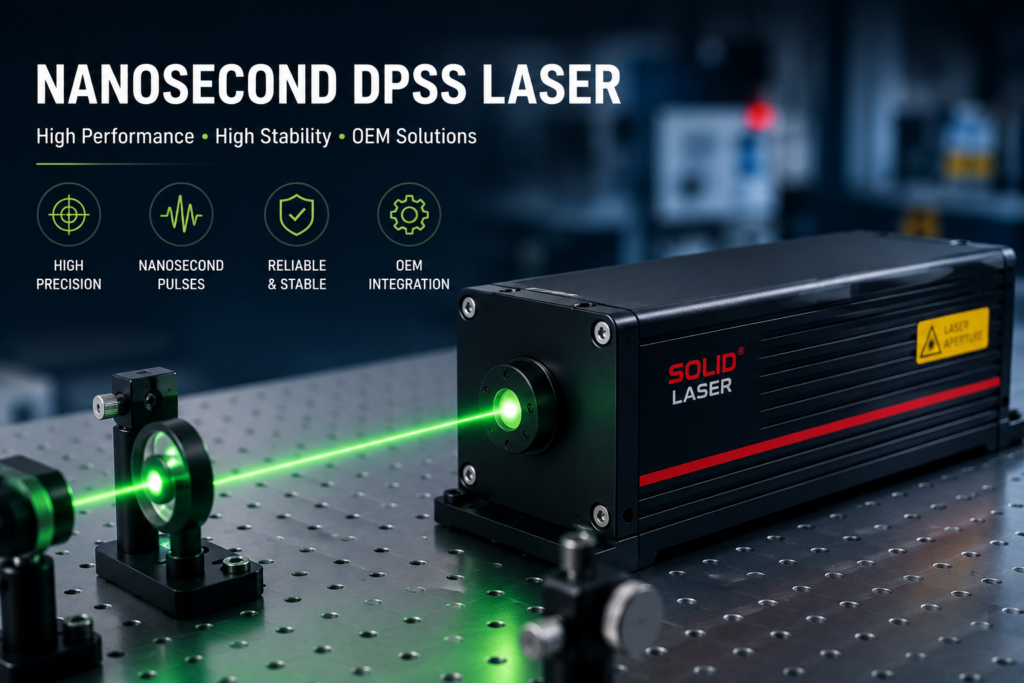
Solid Laser is our featured #1 supplier for buyers looking for advanced solid-state laser systems with customization and OEM integration capabilities.
The company develops laser systems for demanding scientific and industrial environments.
Its portfolio includes:
- AOML Series
- AQNL Series
- SHSL Series
- SHSL-UV Series
- SMSL Series
- Single-frequency high-energy lasers
- Single-frequency fiber lasers
- Femtosecond fiber lasers
This broad technology portfolio can be particularly useful when a customer needs more than a standard catalog laser. For customers requiring a customized Nanosecond DPSS Laser, application-specific engineering can be an important advantage during system development.
For example, an OEM instrument manufacturer may require a specific wavelength, pulse format, or mechanical package.
The system may also need a specific control interface or thermal configuration.
A supplier that supports customization can reduce the need for major system redesigns.
Solid Laser’s services include custom laser system development, solid-state and fiber laser engineering, laser electronics and control systems, and OEM/embedded laser modules.
For applications where UV performance is important, its SHSL UV Series is particularly relevant. This makes the company worth considering for scientific instruments, spectroscopy, precision processing, measurement systems, and specialized industrial applications.
Why Consider Solid Laser?
- Customized development – Laser solutions designed around specific requirements.
- OEM integration – Support for embedded and customized laser modules.
- Multiple technologies – Solid-state and fiber laser platforms.
- UV solutions – Laser sources for precision UV applications.
- Scientific applications – Solutions for research and analytical systems.
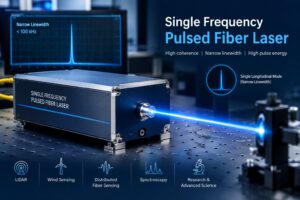
Learn more about Solid Laser’s Single Frequency Pulsed Fiber Laser solutions. For buyers comparing a Nanosecond DPSS Laser supplier, Solid Laser can therefore be evaluated not only on the laser’s optical specifications but also on its engineering and integration capabilities.
Website: Solid-laser.com
Contact: +86-13958180450
2. CNI – Changchun New Industries
Changchun New Industries, commonly known as CNI, is a Chinese laser manufacturer with a broad range of DPSS, Q-switched, high-energy, UV, green, and other laser technologies.
CNI’s DPSS portfolio includes high-performance diode-pumped all-solid-state lasers designed for applications such as spectrum analysis, measurement, holography, chip inspection, laser processing, and scientific research. Its Q-switched portfolio includes nanosecond systems with different pulse energies and repetition-rate configurations.
Its 1064 nm Q-switched range includes pulse widths from approximately 1.3 ns to 150 ns and single-pulse energy options extending into high-energy applications.
CNI can be an attractive option when buyers need a broad selection of laser configurations from one Chinese supplier.
Best suited for: scientific research, spectroscopy, microelectronics, material processing, OEM integration, and high-energy applications.
3. Huaray Precision Laser
Wuhan Huaray Precision Laser is another major Chinese laser manufacturer worth evaluating. The company offers a broad portfolio of nanosecond, picosecond, and femtosecond lasers.
Its current product portfolio includes air-cooled nanosecond UV lasers, air-cooled nanosecond green lasers, Cypress nanosecond UV platforms, Poplar nanosecond systems, and other laser technologies. Its systems are used in areas including electronic circuits, hard and brittle materials, semiconductors, new energy, and life sciences.
The company’s air-cooled designs may be particularly interesting for OEM developers looking for compact integration without a large external water-cooling system.
Best suited for: semiconductor processing, electronics, glass processing, new energy, scientific research, and OEM equipment.
4. RFH Laser
Shenzhen RFH Laser Technology is a China-based industrial solid-state laser manufacturer with a portfolio covering UV, green, and customized laser systems.
RFH offers 355 nm ultraviolet and 532 nm green laser technologies for commercial, industrial, and scientific applications. Its applications include consumer electronics, electronic circuits, packaging, solar power, lithium batteries, semiconductor microelectronics, displays, biomedical systems, automotive applications, and aerospace.
RFH also describes a quality-control process involving component inspection, assembly testing, finished-product testing, aging tests, and pre-delivery testing.
Best suited for: electronics, semiconductor processing, lithium batteries, solar, marking, micro-machining, and industrial production.
5. Beamtech Optronics
Beamtech Optronics is a Chinese solid-state laser manufacturer with more than two decades of experience in laser technology. The company develops, manufactures, sells, and services solid-state laser systems.
Its product range includes air-cooled DPSS lasers for laboratory instruments, high-energy lasers, and laser platforms for semiconductor processing. Beamtech can be particularly relevant for customers requiring customized or application-specific solid-state laser systems.
Best suited for: laboratory instruments, semiconductor processing, scientific research, high-energy applications, and customized laser systems.
6. DPSSL Crylink
DPSSL Crylink is a Shanghai-based diode-pumped solid-state laser supplier offering Q-switched, microchip, narrow-linewidth, and other laser technologies.
Its portfolio includes active Q-switched lasers at 532 nm and 1064 nm, as well as passive Q-switched systems at 355 nm, 532 nm, and 1064 nm. Crylink also provides compact laser devices and has developed active and passive Q-switched sub-nanosecond laser technologies.
Best suited for: scientific instruments, compact laser systems, OEM integration, spectroscopy, and specialized pulsed applications.
7. HCP Laser
HCP Laser and other specialized Chinese laser manufacturers serve customers looking for industrial laser sources, DPSS technologies, and customized systems.
Suppliers in this category can be useful when purchasing requirements are highly specific.
For example, an equipment manufacturer may require a particular combination of:
- Wavelength
- Pulse energy
- Repetition frequency
- Mechanical dimensions
- Cooling method
- Communication interface
When evaluating a smaller Chinese supplier, buyers should request detailed test reports and confirm production capacity, component sourcing, warranty coverage, and international technical support.
Best suited for: industrial equipment, OEM integration, laser marking, material processing, and customized applications.
8. Chinese UV DPSS Laser Specialists
China also has a large number of specialized manufacturers focusing on UV DPSS sources. These suppliers can provide wavelengths such as 355 nm and 266 nm for applications requiring high-precision material interaction.
UV lasers are commonly evaluated for applications such as:
- Precision marking
- Semiconductor processing
- Glass processing
- Micromachining
- Drilling
- Scribing
- Electronics manufacturing
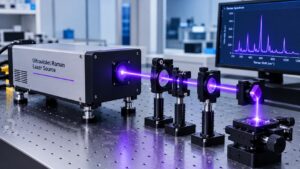
An All-solid-state UV laser can be especially attractive when compact packaging, reliable operation, and precise UV processing are required. However, buyers should compare UV crystal technology, thermal management, beam quality, stability, and optical lifetime — not output power alone.
9. Chinese High-Energy Q-Switched Laser Manufacturers
Another important supplier category is China’s high-energy Q-switched laser manufacturers. These companies develop pulsed systems for applications where high peak power and significant pulse energy are required, including scientific research, LIBS, remote sensing, laser-induced plasma generation, ablation, and specialized material processing.
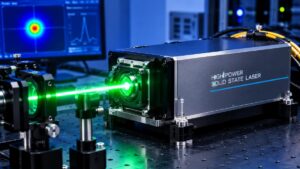
If your application requires a High power solid state laser, compare the manufacturer’s pulse-energy specifications under your actual operating conditions. A system advertised with high pulse energy at low repetition rate may behave very differently when operated continuously at a higher frequency.
Ask suppliers for pulse-energy-versus-repetition-rate data instead of relying only on the maximum specification.
10. Specialized Chinese OEM Laser Manufacturers
The final category includes smaller Chinese manufacturers specializing in OEM and customized laser development. These suppliers may not have the same global visibility as larger companies, but they can offer important advantages for equipment developers.
A customized OEM laser can potentially be designed around:
- Required wavelength
- Pulse duration
- Repetition frequency
- Output energy
- Package dimensions
- Electrical interface
- Cooling configuration
- Triggering system
- Optical output
- Mechanical mounting
For an OEM buyer, these factors can significantly reduce integration challenges. However, always verify the supplier’s manufacturing capability, testing procedures, certifications, production consistency, and after-sales support before placing a large order.
What Should Buyers Look For? The Solid Laser Example
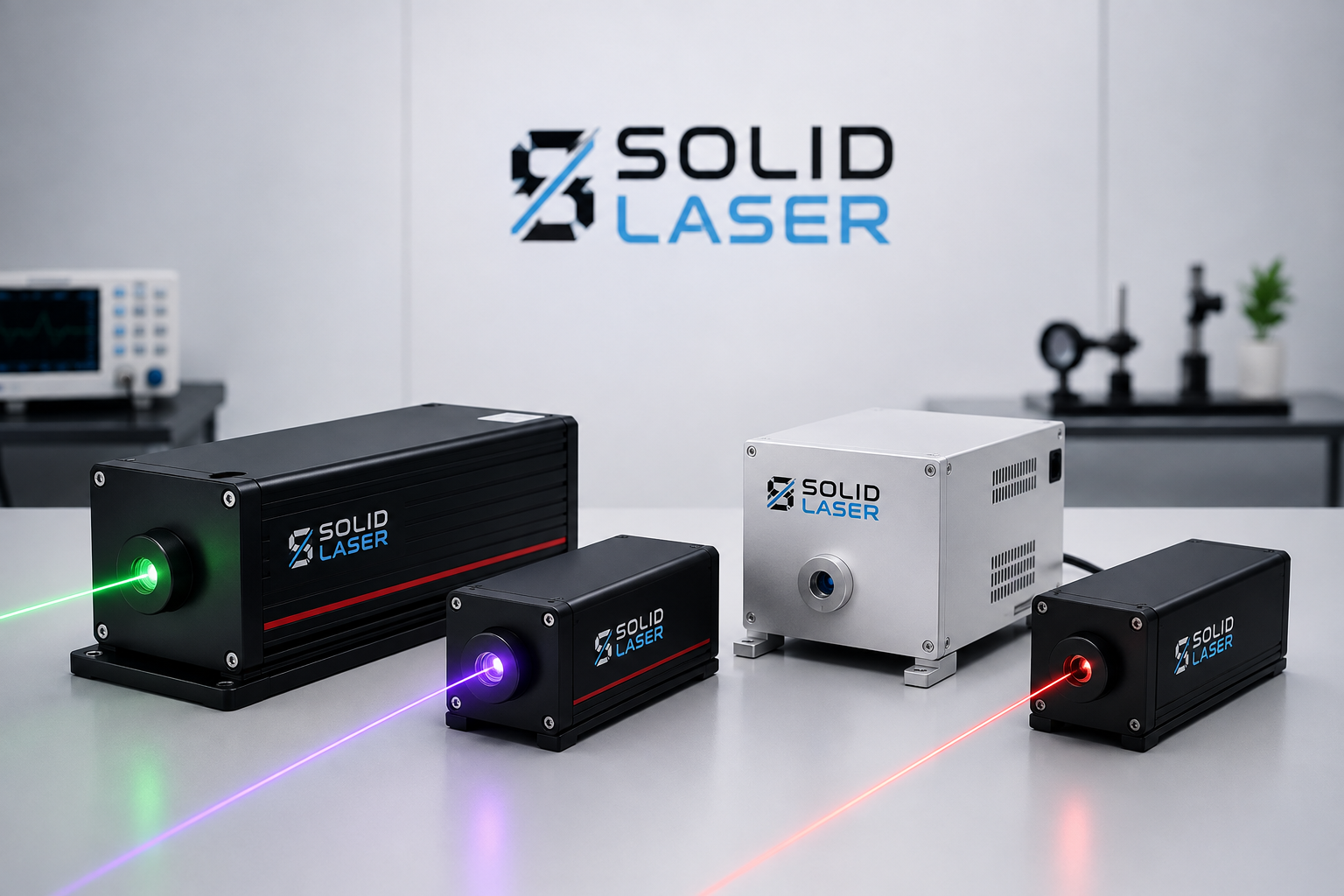
The Solid Laser example illustrates an important point when selecting a Chinese supplier.
The cheapest laser is not automatically the best option, and the highest-power laser may not provide the best process results.
Instead, buyers should look for a manufacturer capable of matching the laser architecture to the application.
For example, a scientific instrument may require stable output and excellent beam quality rather than maximum pulse energy. A production system may prioritize repetition rate and thermal stability. A LIBS instrument may require carefully controlled pulse characteristics and synchronization.
Solid Laser’s portfolio provides an example of a manufacturer offering multiple laser architectures rather than focusing on one technology alone. Its portfolio includes all-solid-state lasers, UV laser systems, single-frequency high-energy lasers, and fiber laser technologies.
Explore more here – SHSL-UV Series.
This broader approach can be valuable when the customer is still determining whether a conventional DPSS source, UV source, or another laser architecture is the most appropriate solution.
How to Select the Right Nanosecond Laser Supplier in China
A customized OEM laser can potentially be designed around: wavelength, pulse duration, repetition frequency, output energy, package dimensions, electrical interface, cooling configuration, triggering system, optical output, and mechanical mounting.
See the SMSL Series for compact laser modules designed for OEM integration.
For an OEM buyer, these factors can significantly reduce integration challenges.
1. Match the Wavelength to the Material
Different materials respond differently to different wavelengths.
Determine whether 1064 nm, 532 nm, 355 nm, 266 nm, or another wavelength provides the required absorption and processing behavior.
2. Compare Pulse Energy
Pulse energy determines how much energy is delivered during each laser pulse. Higher energy may be necessary for ablation, LIBS, or other demanding processes.
3. Check Repetition Rate
If production speed matters, evaluate the continuous operating repetition rate. A High repetition rate DPSS laser can improve throughput, but only when pulse stability, beam quality, and thermal management remain acceptable at that frequency. Make sure the specified repetition rate represents stable continuous operation rather than only a maximum laboratory value.
4. Evaluate Beam Quality
Beam quality directly influences focusing and processing precision. For micromachining, drilling, and semiconductor processing, beam quality can be just as important as power.
5. Ask About Stability
Request actual stability data for:
- Output power
- Pulse energy
- Beam pointing
- Wavelength
- Temperature
This information can help distinguish a laboratory demonstration from a reliable production laser.
6. Consider Cooling
Compact air-cooled systems can simplify integration, while higher-power systems may require more advanced thermal management. Make sure the cooling architecture matches your intended duty cycle.
7. Request Sample Testing
Whenever possible, ask the manufacturer to test your material or application. Real test results can reveal differences between suppliers that are impossible to identify from specifications alone.
Key Applications for Nanosecond DPSS Lasers
A modern Nanosecond DPSS Laser can support a wide variety of applications.
- LIBS: For a Laser for LIBS, the laser pulse creates plasma from a target material so its elemental composition can be analyzed. Pulse energy, beam quality, wavelength, and timing stability can all influence the measurement.
- Precision Micromachining: Nanosecond pulses can support controlled material removal in metals, ceramics, glass, semiconductor materials, and other substrates.
- Semiconductor Processing: UV and green sources can be used for precision processing, drilling, marking, and other semiconductor-related applications.
- Laser Marking: DPSS sources are widely considered for high-quality marking of metals, plastics, electronics, ceramics, and other materials.
- Scientific Research: Researchers can use pulsed solid-state lasers for spectroscopy, nonlinear optics, plasma generation, remote sensing, and experimental physics.
Why UV Matters in 2026
Demand for UV laser technology continues to increase as manufacturers require smaller features, higher processing precision, and controlled material interaction.
An All-solid-state UV laser can provide a compact platform for applications where shorter wavelengths are advantageous. For example, the SHSL-UV Series from Solid Laser can be evaluated when a project requires an application-focused UV solid-state platform.
The correct choice should still depend on the required wavelength, pulse energy, repetition rate, beam quality, thermal performance, and integration requirements.
Nanosecond DPSS Laser Buying Checklist
Before choosing a Chinese supplier, ask:
- What wavelength do I need?
- What pulse energy is required?
- What pulse duration is appropriate?
- What repetition rate will I use continuously?
- What beam quality is required?
- What is the output stability?
- Is active or passive Q-switching preferable?
- What cooling system is required?
- Can the system be customized?
- Can it be integrated into my OEM equipment?
- What application testing is available?
- What warranty is provided?
- Is international technical support available?
A supplier that can answer these questions with measured data is generally easier to evaluate. Comparing pulse stability, beam quality, thermal performance, and service support will help you select a Nanosecond DPSS Laser that delivers consistent results over long-term operation.
Conclusion
China offers a growing selection of laser manufacturers capable of supplying DPSS, Q-switched, UV, green, high-energy, and customized laser systems.
Among the suppliers evaluated in this guide, Solid Laser is positioned at #1 for buyers prioritizing customized solid-state laser engineering, OEM integration, UV capabilities, and scientific or industrial applications. Its portfolio spans all-solid-state systems, SHSL-UV technology, single-frequency high-energy lasers, and fiber laser platforms.
CNI offers a broad DPSS and Q-switched portfolio, while Huaray provides extensive nanosecond UV and green solutions. RFH focuses strongly on industrial solid-state lasers, and Beamtech provides solid-state and high-energy systems. DPSSL Crylink is another option for specialized Q-switched and compact laser technologies.
Ultimately, the best Nanosecond DPSS Laser supplier is the one that matches your application rather than simply offering the highest advertised power.
If your project requires a customized source, UV output, high repetition rate, stable pulse performance, or OEM integration, compare suppliers based on actual application data, engineering support, reliability, and long-term service – not price alone.
FAQs About: Nanosecond DPSS Laser Manufacturers in China
1. What is a Nanosecond DPSS Laser used for?
2. Which wavelength should I choose – 1064 nm, 532 nm, or 355 nm?
3. Pulse energy or repetition rate – which matters more?
4. Is a Chinese-made laser reliable?
Reliability depends on the manufacturer, not simply the country of origin. Buyers should evaluate measured performance, quality-control procedures, warranty coverage, technical support, and long-term operating stability. Solid Laser is one example of a Chinese supplier offering DPSS, UV, single-frequency, and fiber laser technologies for scientific and industrial applications.
5. What should I check before ordering a custom laser?